
There’s something undeniably magnetic about stepping into the kitchen of someone who has been cooking the same way for decades. No clutter of smart gadgets. No subscriptions to meal kits. Just a handful of worn, trusted tools doing exactly what they were designed to do – beautifully. Old-school cooks have a quietly radical philosophy: if it isn’t broken, don’t replace it with an app.
What makes these kitchens so compelling isn’t just the nostalgia. It’s the fact that the items you find in them are, without exception, still among the most effective tools in any cooking space. From a heavy black skillet to a tin box full of faded handwriting, these are the things that separate real cooks from recipe scrollers. Let’s dive in.
Table of Contents
1. A Cast Iron Skillet – Seasoned, Black, and Absolutely Non-Negotiable
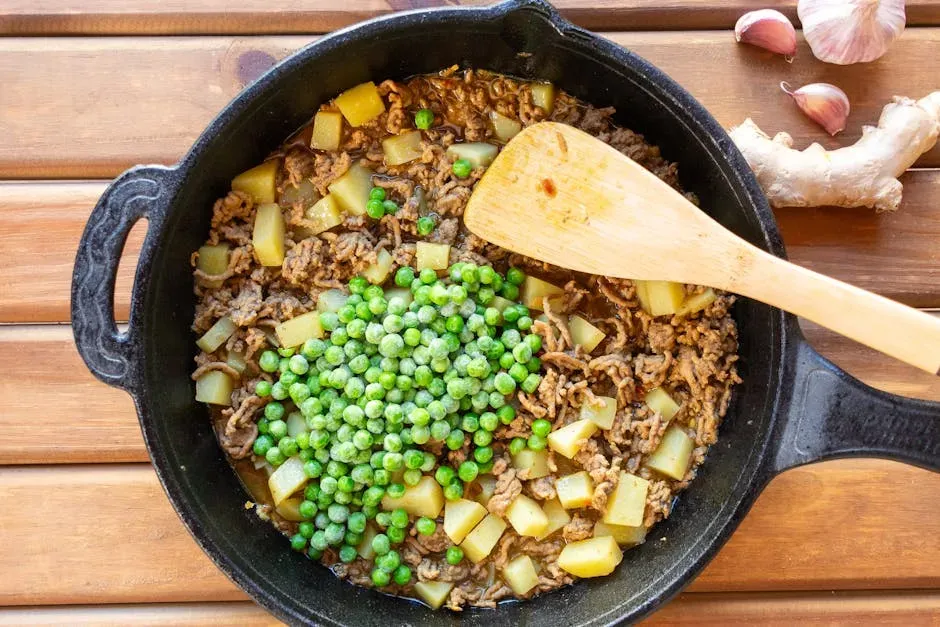
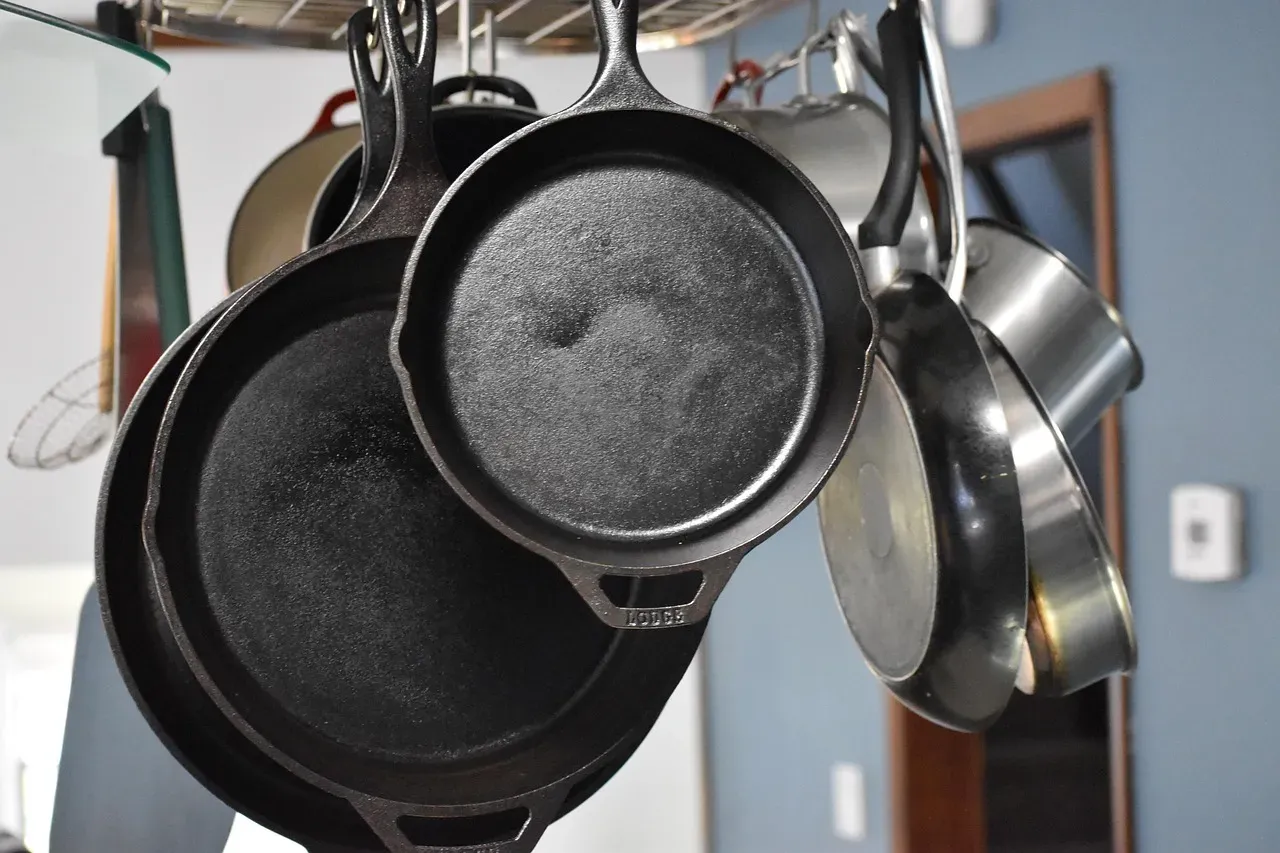
Walk into any old-school cook’s kitchen and the cast iron skillet is almost always the first thing you spot. It usually sits right on the stove, not tucked away in a cabinet – because it never goes away. It’s used for everything from cornbread to seared steak, and it somehow makes both taste better than they have any right to.
The numbers back this up in a big way. The global cast iron cookware market was estimated at USD 4.43 billion in 2024 and is projected to reach USD 7.37 billion by 2030. That’s not just trend chasing – that’s the entire world quietly rediscovering what grandmothers already knew. As of 2024, more than roughly two thirds of consumers in North America expressed a preference for heavy-duty, long-lasting cookware, with cast iron topping the list due to its durability, heat retention, and versatility.
Here’s the thing – a well-seasoned cast iron skillet is essentially a living object. The proper application of seasoning produces a natural non-stick surface which strengthens itself with age, and cast iron does not contain the synthetic coatings that non-stick pans include, which makes it a superior option for better health. Old-school cooks understood this intuitively, long before it became a wellness trend.
Products like cast iron skillets and Dutch ovens can last for over 50 years with proper care, leading to notable growth in repeat purchases among younger consumers aged 28 to 35. Even the newer generations are catching on. Still, there’s a reason why the skillet hanging in a 70-year-old cook’s kitchen often looks better than the one you bought last year.
2. A Big, Heavy Dutch Oven – Built for Slowness
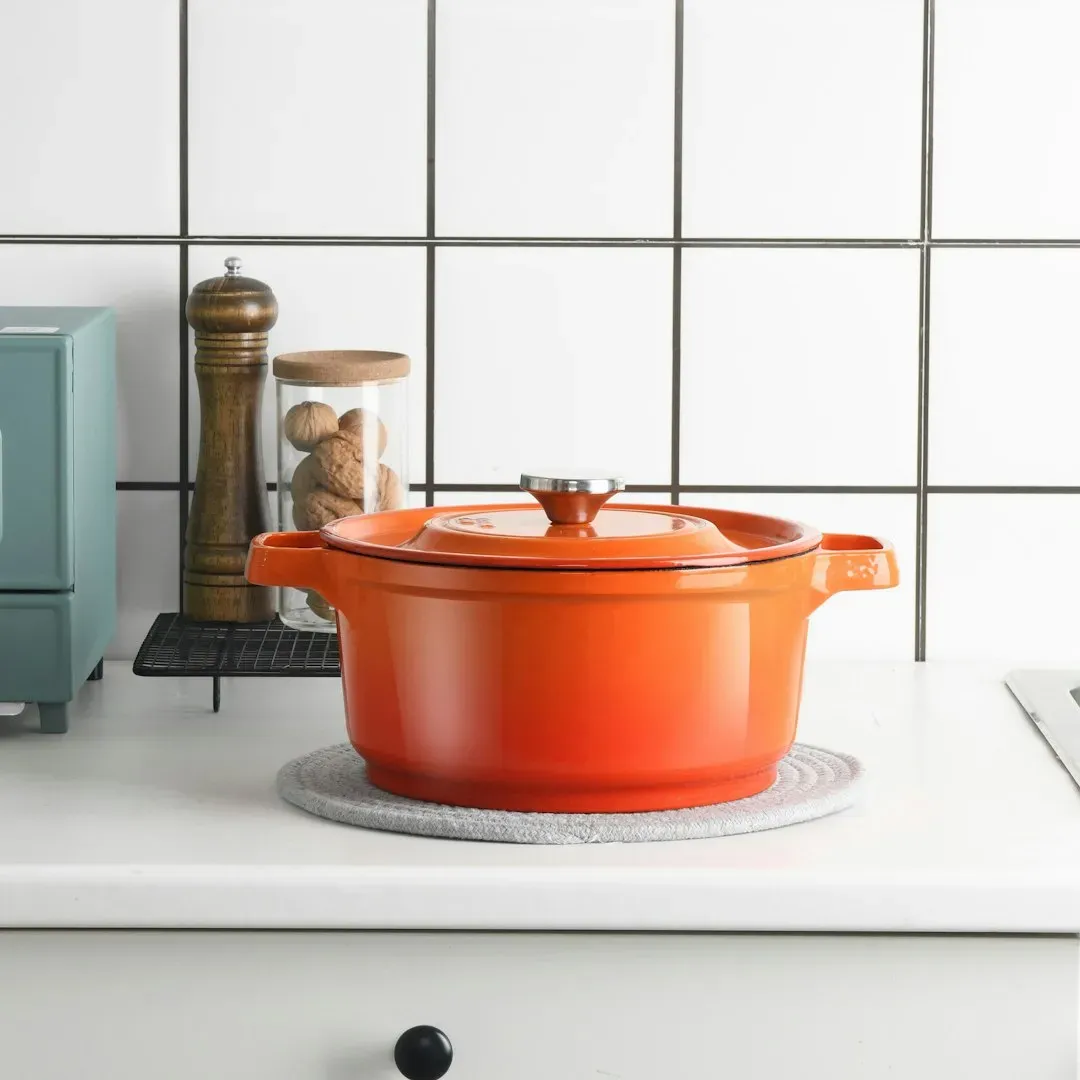
The Dutch oven is the stew pot, the braising vessel, the bread baker, and the slow Sunday project all rolled into one. Old-school cooks reach for it without thinking. It’s the cookware equivalent of a slow deep breath – it asks nothing of you except patience, and it rewards that patience generously.
The Dutch oven and skillet together form an unchanging base of kitchen tools which serve both amateur cooks and professional chefs equally well. Think about that for a moment. Not the latest food processor or the digital thermometer with Bluetooth. Just a heavy pot with a tight lid – unchanged for centuries. Multi-purpose cookware, such as Dutch ovens, indicates the growing need for kitchenware that can be used for different cooking methods from braising to baking.
A Le Creuset pot will inject each slow-braised dish with layers of flavour gathered over decades of use, and is handy on both the stove for stocks and in the oven for slow roasts. Honestly, I think the Dutch oven might be the single most honest piece of kitchen equipment ever invented. It does what it says. It does it for generations. No firmware update required.
3. A Wooden Spoon – Old, Stained, and Irreplaceable
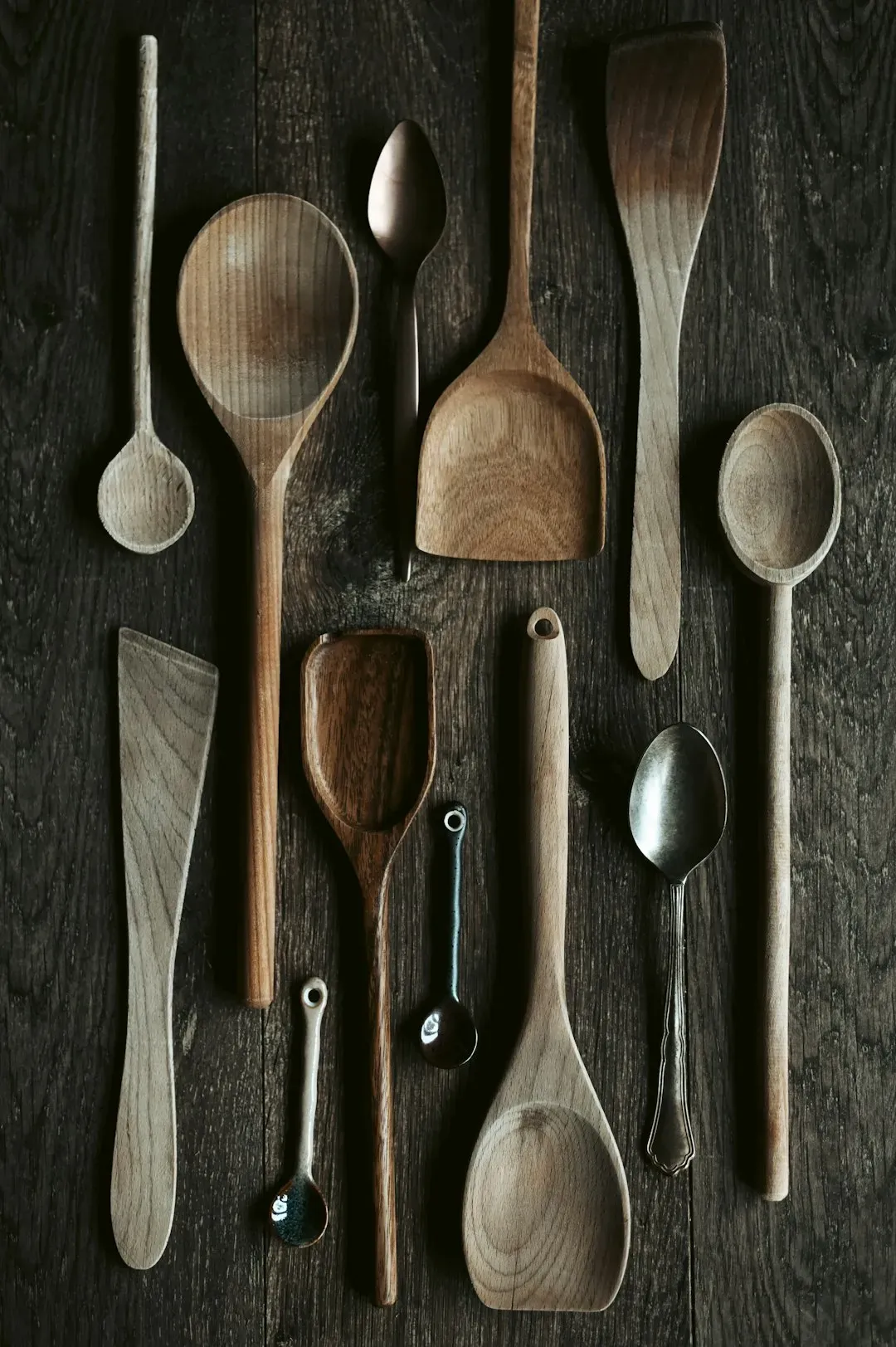
Every old-school cook has a wooden spoon that looks like it has seen things. It’s dark with oil, slightly warped from years of heat, and there is absolutely no chance it’s going anywhere. This is not sentiment. This is function. A wooden spoon doesn’t scratch pans, doesn’t conduct heat, and doesn’t melt if you leave it resting on the rim of a simmering pot.
Wooden kitchen tools have experienced a genuine revival in recent years. Wooden spoons and spatulas are listed among the most natural and warmth-bringing items for a kitchen, doubling in many homes as both functional tools and items of display. Old-school cooks never stopped using them, but it’s satisfying to see the world catch up.
There is something almost ceremonial about the wooden spoon. It’s the tool that stirs the risotto for forty minutes. It’s what scrapes the fond from the bottom of the pan after a perfect sear. In the past, utensils were primarily made of natural materials like wood, bone, and stone – and for the wooden spoon, there’s a strong argument that nothing has truly improved on that original design. Simple, tactile, effective. That’s the whole story.
4. A Mortar and Pestle – Because Grinding Matters
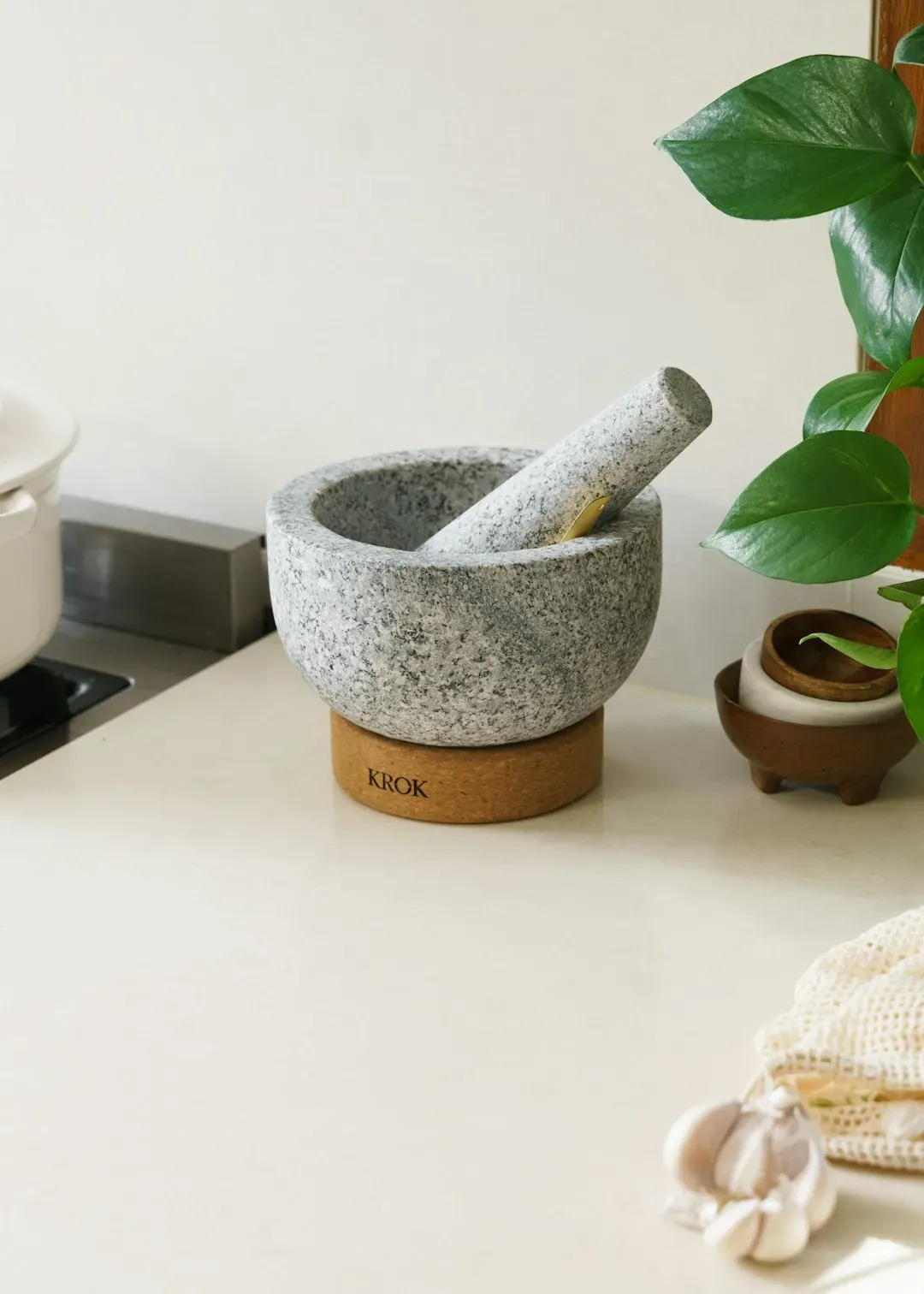
You’ll almost always spot one of these in the kitchen of a cook who takes flavor seriously. It might be granite. It might be olive wood. It might be a heavy stone molcajete passed down from a grandmother. Whatever the material, the principle is the same: some things taste better when you crush them by hand.
Mortars and pestles are time-tested kitchen tools used for centuries across countless cultures to hand-craft spice rubs, herb blends, pastes, and more from scratch. The science behind this is real. Instead of simply cutting ingredients into tiny pieces as a food processor might do, the pestle crushes them, extracting more of the aromatic oils and flavor compounds in the process. That’s the difference between a spice and a flavor.
Although most current kitchens choose electric spice grinders and blenders for their speed and ease, mortars and pestles are gaining popularity again as folks shift toward more old-fashioned, natural cooking. Old-school cooks never abandoned them in the first place. Pesto, salsa, and curry paste made with a mortar and pestle have a more complex, savory, and cohesive flavor and a softer, more luscious texture than the same foods made in the food processor. Once you know this, going back to the machine feels like a small defeat.
5. A Well-Worn Stockpot – For Broths That Take All Day
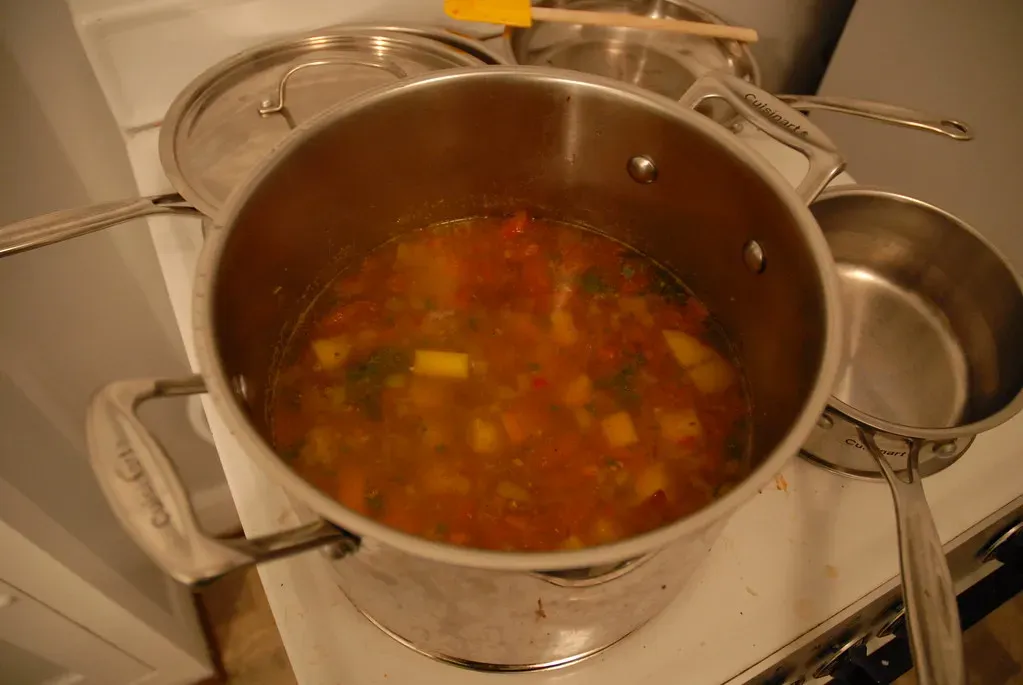
No hurry. No shortcuts. That is the entire philosophy behind a traditional stockpot, and old-school cooks understand this better than anyone. The stockpot lives on the back burner. It simmers for hours. It turns vegetable scraps, chicken bones, and herb stems into something that makes everything you cook taste deeper and more alive.
The stockpot is the quiet engine of old-school cooking. Many cookware sets include a stockpot, but you can also buy one separately – and in a traditional kitchen, you will always find one that has clearly been bought separately, because it matters enough to choose carefully. Homemade stock is one of those foundational habits that separates cooks who learned from people from cooks who learned from screens.
It’s hard to say for sure when the practice of making stock from scratch started to fade in mainstream kitchens, but the store-bought carton version is a pale imitation. A good homemade broth built low and slow in a wide stockpot carries flavor that simply cannot be faked. In the pursuit of culinary excellence, there’s a profound appreciation for the flavors that have stood the test of time. Embracing tradition isn’t merely a nod to the past; it’s an acknowledgment of the wisdom, craftsmanship, and cultural heritage embedded within age-old recipes.
6. A Recipe Box Full of Handwritten Cards
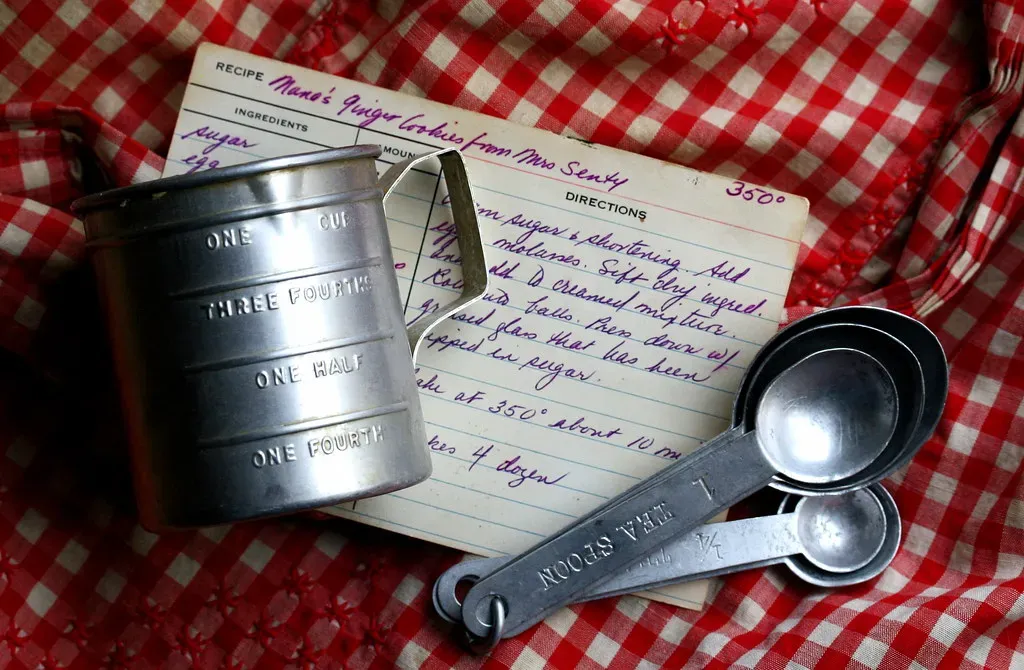
This one might be the most emotionally charged item on the list – and rightfully so. The recipe box. Usually small, often metal or wood, always crammed with cards in different handwriting, different ink colors, different levels of coffee staining. Every old-school cook has one, and it is absolutely not decorative.
In the era of digital documentation and instant sharing, there’s something uniquely sentimental about handwritten recipe cards, passed down through generations. These little cards, often tucked away in old recipe boxes, carry with them the flavors and memories of family gatherings, holidays, and everyday meals that have shaped our lives. A recipe box is, in the truest sense, a family archive disguised as a kitchen tool.
Preparing a dish passed down through generations offers a tangible connection to a cook’s heritage, anchoring people in their family’s history. At the same time, this revival has only grown stronger into 2026, reflecting broader cultural shifts – from the enduring farm-to-table movement to a renewed appreciation for handmade, deeply personal food traditions.
Social media platforms like TikTok and Instagram have played a pivotal role in amplifying the appeal of retro recipes, with viral hashtags like #RetroCooking and #GrandmasRecipes introducing these dishes to younger generations, driving them to become new culinary trends. There is something quietly defiant about a cook who reaches for a water-stained index card instead of a phone screen. That defiance is exactly the point.
The Bigger Picture: Why These Six Things Still Matter
Old-school cooks are not behind the times. They are, in many ways, ahead of them. The cast iron skillet, the Dutch oven, the wooden spoon, the mortar and pestle, the stockpot, and the recipe box are not relics. They are proof that the best answers in cooking were often found decades ago, and the wisest thing we can do is pay attention.
The cast iron cookware market is experiencing a renaissance, driven by a growing consumer preference for durable, versatile, and health-conscious cooking solutions. The resurgence of home cooking, coupled with the increasing popularity of traditional and artisanal culinary methods, has significantly boosted demand for cast iron cookware products. The market is catching up with what old-school cooks never forgot.
There is a lesson buried in every one of these six items. Slow down. Use your hands. Build flavor from the ground up. Cook for the people you love, and write it down so they can do the same long after you’re gone. The kitchen of an old-school cook is not a museum – it’s a quiet, ongoing argument that the best tools are the ones that last a lifetime. What would you add to this list?