
Most people have no idea what’s sitting in their grandmother’s cabinet. A dusty set of old dishes, passed down through generations, quietly collecting cobwebs behind a glass door. Here’s the thing – some of those forgotten sets are worth more than a used car. A few are worth more than a house.
The world of antique china collecting is a fascinating, sometimes jaw-dropping corner of the art market. Prices range from almost nothing to jaw-dropping millions, and the gap between those two ends is truly enormous. If you’ve ever wondered whether your inherited china is treasure or just tableware, this gallery might change your thinking. Let’s dive in.
Table of Contents
1. Meissen Porcelain: The Original “White Gold” of Europe
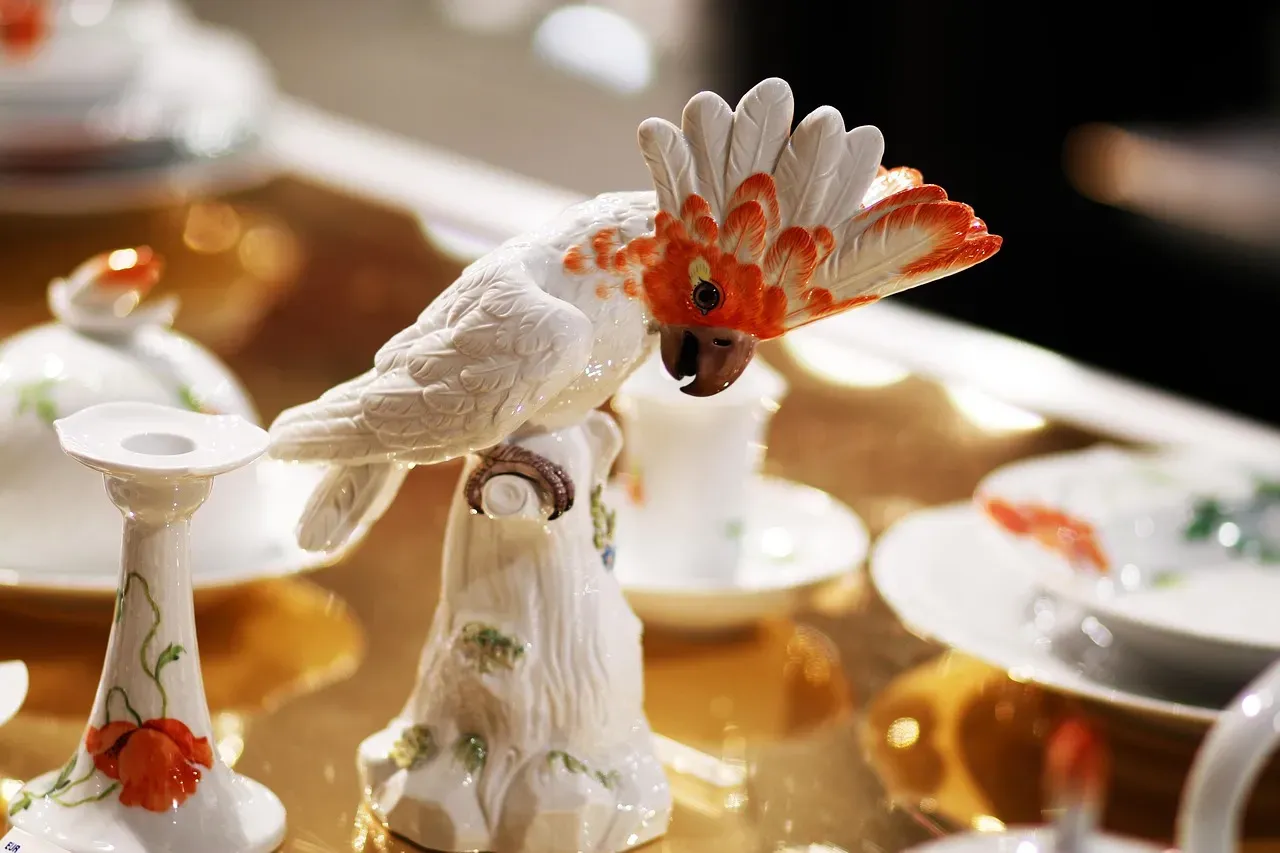
Called “white gold” because of its high price, rarity, and desirability, Meissen porcelain has been considered the finest by European aristocracy as well as decorative arts connoisseurs for 300 years. That’s not marketing language – it’s a reputation earned over centuries of extraordinary craftsmanship. Honestly, no other European porcelain maker even comes close to Meissen’s legacy.
Meissen is the first manufacturer of hard-paste porcelain in Europe. August the Strong, Elector of Saxony, tasked the alchemist Johann Friedrich Böttger and physicist Ehrenfried Walther von Tschirnhaus to discover the secrets of creating white porcelain like the increasingly popular Chinese ceramics. In 1708 they succeeded, and in 1710 Augustus established the Royal Polish and Electoral Saxon Porcelain Manufactory at Meissen. Think of it like a royal arms race, except instead of weapons, they were after fine dinnerware.
The first part of the illustrious collection of 18th-century Meissen porcelain sculptures was auctioned on April 17, 2024, at Bonhams in Paris. This 55-lot sale fetched an impressive €948,450, significantly surpassing its pre-sale high estimate of €594,800, highlighting the enduring allure and value of Meissen porcelain. One single rare Meissen group of lovers with a birdcage sold for €171,850, more than quadrupling its low estimate.
As of 2026, Meissen continues to draw strong interest, particularly among European and Asian collectors. While overall demand for porcelain remains softer than its mid-20th-century peak, truly rare or early Meissen pieces are still commanding impressive prices. Larger or more intricate works – especially those made before 1900 – can reach several thousand dollars, while museum-quality 18th-century pieces continue to fetch five- or even six-figure sums at top-tier auctions.
2. Sèvres Porcelain: Born in the Palace of Versailles
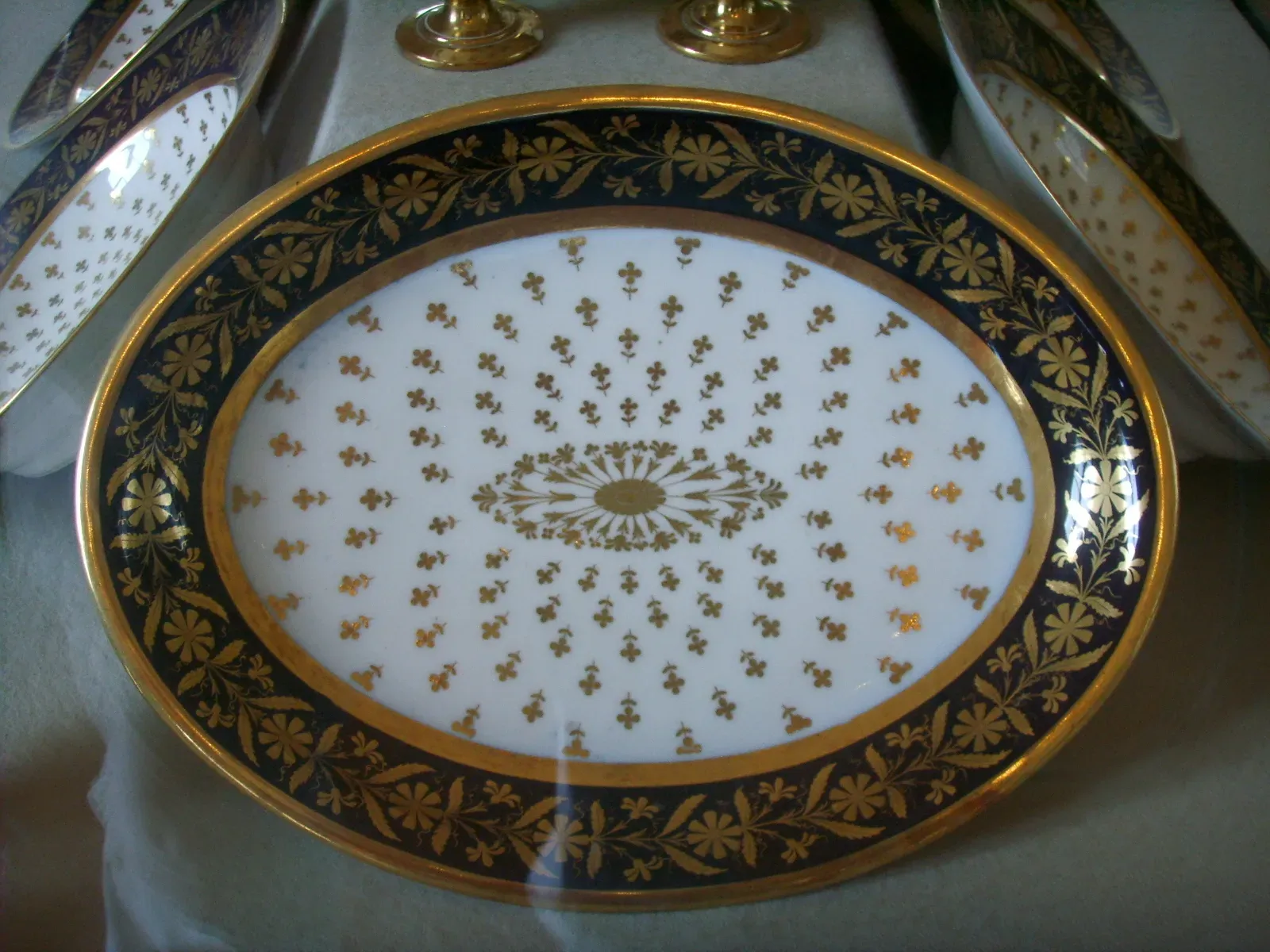
If Meissen is the king of European porcelain, Sèvres is its royal French rival. It is the continuation of Vincennes porcelain, founded in 1740, which moved to Sèvres in 1756. It has been owned by the French crown or government since 1759. That kind of royal association translates directly into collector value – no question about it.
The “Marie Antoinette” pattern was originally created in 1782 for the personal use of Queen Marie Antoinette, featuring green bands with blue flowers. Sets connected to this legendary pattern still carry remarkable value at auction. A replica Limoges (Bernardaud) 90+ piece set sold for $5,500 in 2024. For an original period Sèvres piece, prices climb considerably higher.
Sèvres porcelain’s unique soft-paste formula is distinguished by its translucent appearance and vivid colors, setting it apart from other manufacturers at the time. The association it had with the French monarchy also elevated its status. It’s the porcelain equivalent of wearing a crown to dinner. That royal pedigree never really loses its power in the auction room.
A band of hunting scenes full of animals and meandering foliage and trailing branches surrounds a gilt geometric pattern with a central star medallion on the famous Sèvres Hunting Service, commissioned for the Chateau de Fontainebleau circa 1837. There are small reserves of iron red medallions of trophies. The animals portrayed are dogs, boars, birds of prey, snakes, pheasants, and deer. An antique 37-piece set from this service sold for $4,000 in 2024.
3. Royal Copenhagen Flora Danica: The Botanist’s Dream Set
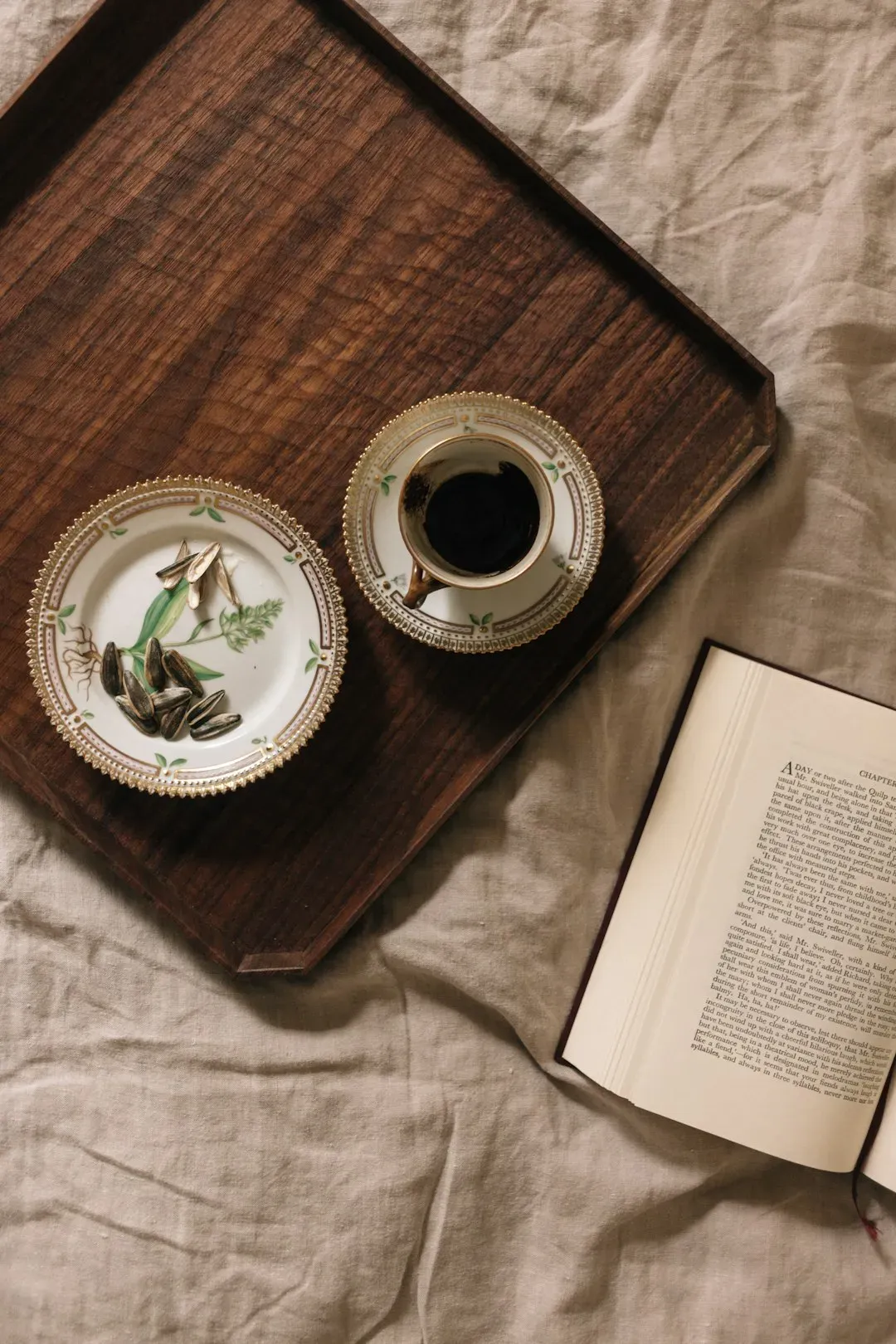
I’ll be direct – if there’s one china set that serious collectors treat almost like a religion, it’s Flora Danica. Flora Danica by Royal Copenhagen was commissioned by King Christian VII of Denmark in 1790. Each piece features hand-painted flowers and plants based on a famous botanical atlas. A single dinner plate can sell for over $10,000. Let that sink in. One plate.
Resellers and dealers may pay more than $1,000 for a Royal Copenhagen Flora Danica dinner plate, the golden ticket of pre-owned china. It is, without exaggeration, one of the most consistently prized china patterns in the world. The sheer labor involved in hand-painting every single botanical specimen – each one individually named – makes these pieces almost absurdly labor-intensive by modern standards.
In general, the value of fine china depends on the brand, condition, location, and age. An older, antique piece of china will command a higher price than newer pieces. The location or origin can also help determine its value. For example, Limoges china from the city of Limoges, France, is regarded as a high-priced item. Flora Danica hits every single one of those value markers at once.
The world of antique Chinese ceramics and European fine china continues to captivate collectors and investors with astounding prices at major auctions. While the most valuable pieces often sell for millions at prestigious auction houses, there’s also a thriving market for more accessible antique china on platforms like eBay. Flora Danica sits firmly at the premium end of that spectrum, and it’s been that way for decades.
4. Meissen Blue Onion: The Iconic Pattern That Never Gets Old
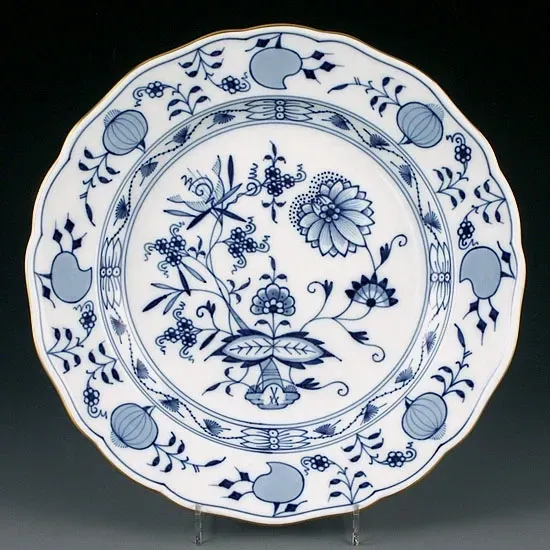
Here’s a china pattern that has been in continuous production for nearly 300 years – and is still making collectors rich. The Blue Onion is an iconic blue and white pattern inspired by Chinese porcelains. European decorators misinterpreted the Chinese peaches and melons for onions. It was introduced in 1739 and is still in production today. That’s a track record most luxury brands can only dream of.
The Meissen “Blue Onion,” or Zwiebelmuster, pattern was first produced in the early 1740s and was modeled after the imported blue and white porcelain produced in China. A close look at pieces from this line reveals that no onions actually appear in the design. Rather, to give the pattern its own Saxon style, Meissen’s designers refined the cobalt blue decorative motifs to include flora more characteristic of the European landscape, such as peony and aster blooms. Despite this misnomer, Meissen’s Blue Onion pattern rapidly became one of its most popular and copied.
A 19th and 20th century Blue Onion set of over 200 pieces sold for $23,894 in 2025. That’s the kind of result that makes collectors do a double-take. The key, as with almost all antique china, is age and authenticity – early Meissen examples command a serious premium over later reproductions by other manufacturers.
The signature crossed swords mark, taken from the coat of arms of the Electorate of Saxony, was introduced in 1722 to proclaim the exceptional quality and authenticity of Meissen porcelain. Always check the back. That small mark is the difference between a priceless antique and a pretty reproduction. It’s a lesson every serious collector learns sooner or later.
5. Tiffany Cirque Chinois: Where French Artistry Meets Collector Frenzy
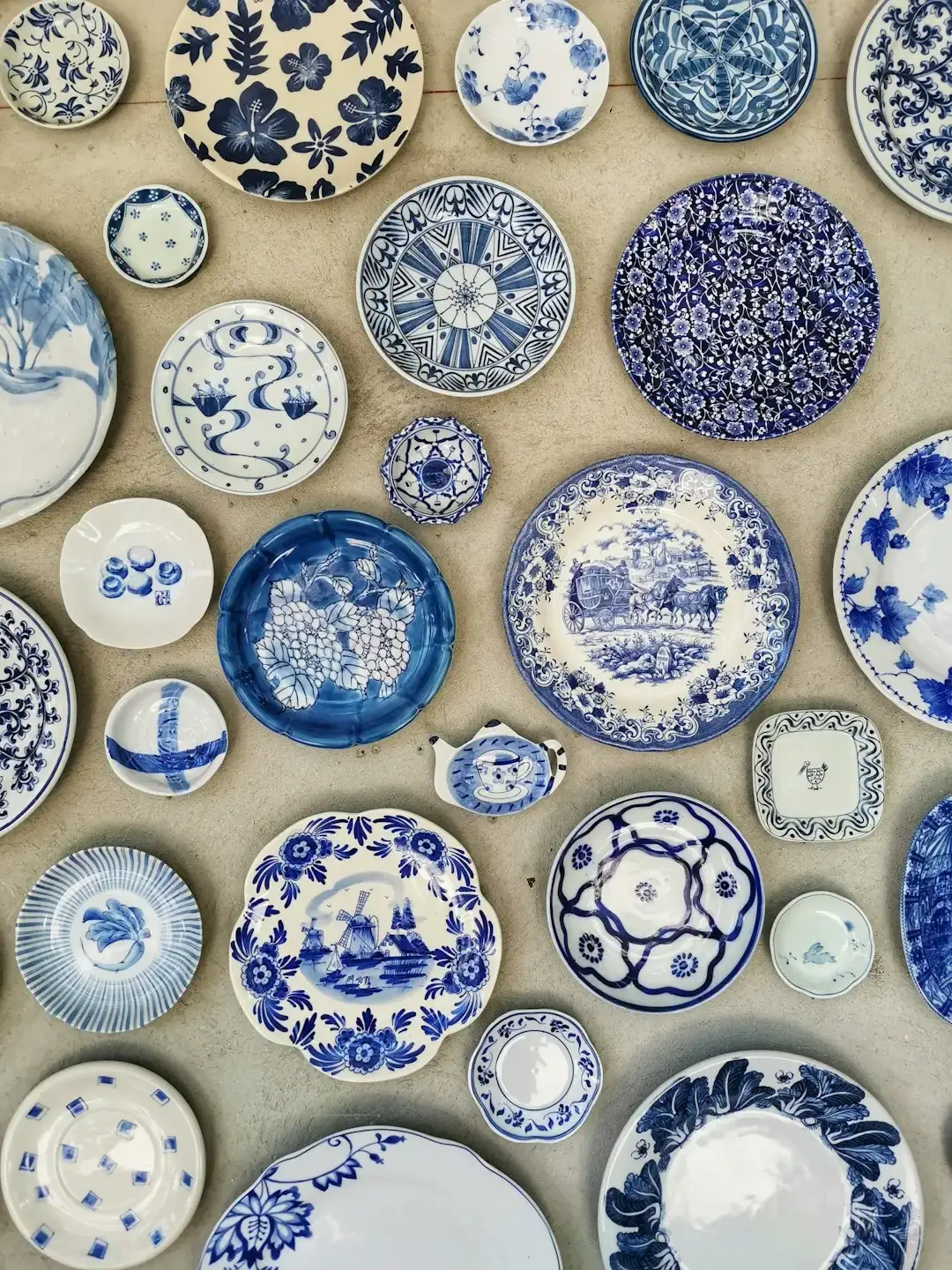
Not every high-value china set is from the 18th century. Some discontinued 20th-century patterns are climbing in price at a rate that surprises even seasoned dealers. Take the Tiffany Cirque Chinois pattern as a prime example. Designed by Camille Le Tallec, a French artist who lived from 1906 to 1991, the Cirque Chinois features various hand-painted multi-colored Chinoiserie figures with horses and pagodas on white porcelain. It has been discontinued.
A 69-piece Cirque Chinois set sold for $16,000 in 2025, a 37-piece set sold for $13,000 in 2024, and a 96-piece set sold for $40,000 in 2021. Those numbers tell a clear story. Discontinued, hand-painted, and associated with a luxury name like Tiffany – it’s a collector’s perfect storm. The rarity factor intensifies every year that passes without new pieces being made.
China pieces are priced depending on their condition, brand, rarity, style, and age. Cirque Chinois ticks every single box with an almost unfair level of confidence. It’s worth noting that individual pieces from incomplete sets still attract strong interest, making even partial collections meaningful finds at estate sales or antique fairs.
Using auction records as a reference helps you avoid making the mistake of selling your pieces for too little or buying new pieces for too much. Iryna Kolosvetova recommends auction houses such as Christie’s or Sotheby’s, which maintain searchable archives of sold pieces so that you can research your specific set. For Cirque Chinois specifically, recent results speak clearly.
6. Qing Dynasty Imperial Porcelain: The Million-Dollar Standard
When people talk about antique china at the very top of the market, this is where the conversation always ends up. Qing Dynasty Porcelain is not merely china – it’s a slice of history auctioned to the highest bidder. The finesse in craftsmanship and the tales of imperial China encapsulated in each piece make them a collector’s dream. The astronomical price of $84 million fetched by a Qing Dynasty Porcelain piece is a testament to its unrivaled value in the fine china market.
A Qing Dynasty Falangcai “Swallow” Bowl from the Qianlong period, dated 1735 to 1796, achieved $25.25 million at Sotheby’s Hong Kong in 2023. This exquisite bowl showcases the rare and highly prized Falangcai enameling technique. Incredibly, an 18th century Chinese bowl set auction records in 2023 when it sold for $25 million at a Sotheby’s auction. The bowl, measuring less than five inches in diameter, actually only sold for about 150 British pounds back in 1929 – because the seller likely had no idea what they had.
Pieces produced during the reign of the Qianlong Emperor, from 1735 to 1796, are highly prized for their fine quality and decoration. The Qianlong period is considered the golden age of Chinese imperial porcelain production, and complete or near-complete sets from this era are extraordinarily rare. Most pieces scattered across the globe are individual survivors from sets long since dispersed.
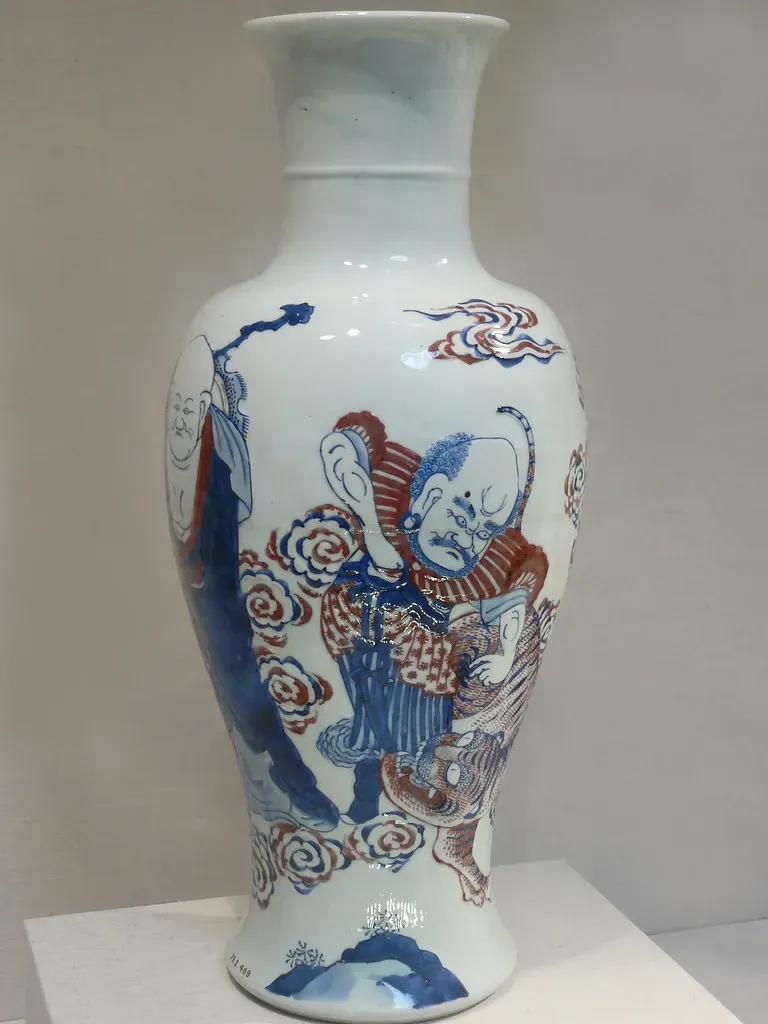
There are no more than 100 Jihong Fine China pieces in the world. That kind of scarcity is almost impossible to overstate. In 2006, a rare copper-red under-glazed Ming Dynasty vase sold for $10 million at a Christie’s auction in Hong Kong. The beautiful pear-shaped porcelain vase, dating from the early Ming Dynasty period from 1368 to 1644, was presented to a Macau Museum by the buyer. Whether Ming or Qing, imperial Chinese porcelain remains the undisputed pinnacle of the antique china world.
How to Know What You Actually Have
So you’ve read this far, and now you’re eyeing that old cabinet in the dining room with fresh suspicion. Good. To start the valuation process, check for the hallmark, a logo that is usually on the bottom or back of the item. The hallmark may be a name, symbol, photo, or country of origin – for example, English china usually has a unicorn, a lion, or some type of royal symbol.
If you can’t find a hallmark on your china, chances are it was made before 1890. After 1890, the McKinley Tariff Act required imported goods to have an origin stamp. That little legal detail is actually one of the most useful free dating tools available to any collector. No stamp at all? You might be looking at something genuinely old.
The value of some china pieces is quickly dwindling. Many Royal Copenhagen, Royal Worcester, Lenox, and Wedgwood china sets retail at half the price of new china. Others, if they sell at all, bring $150 to $200 at estate auctions. Not every china set is worth a fortune, and that reality check matters. Still, the six sets covered above are a different story entirely.
The difference between a $200 china set and a $200,000 one often comes down to four things: maker, age, condition, and rarity. Think of it like real estate – location, location, location. Except here it’s provenance, provenance, provenance. If you’re still unsure what you have, get a professional appraisal before you do anything else. The estate sale you pass on this weekend might be hiding something extraordinary. Would you know it if you saw it?