
Every week, millions of people push a cart through brightly lit aisles, toss in their usual items, and walk out feeling like they made sensible choices. Yet somehow, the receipt always seems a little higher than expected. It’s not just inflation doing that to you. There’s a whole system working quietly in the background, nudging your eyes, reshaping your sense of “a good deal,” and filling your cart with things you never planned to buy.
Modern grocery stores rely heavily on pricing psychology, data analysis, and strategic product placement. These tactics are not necessarily deceptive, but they are designed to encourage shoppers to spend more than they originally planned. The result? You leave the store with a lighter wallet and a vague feeling that something doesn’t quite add up. Let’s dive in.
Table of Contents
1. Shrinkflation: Less Product, Same Price Tag
Shrinkflation is one of the sneakiest tricks in the grocery industry playbook. It occurs when manufacturers decrease the quantity of an item without a corresponding price drop. Sometimes the price doesn’t change at all. Sometimes the price goes down slightly, but the per-unit price is still higher than before. It’s a bit like ordering a large pizza and slowly, week by week, the pizza gets smaller while the box stays exactly the same size.
The U.S. Government Accountability Office confirmed that while shrinkflation’s overall contribution to national inflation figures was small, the per-unit price increases on individual downsized products were far more significant. Coffee, for example, saw average per-unit price increases of up to 32 percent due to downsizing. That’s enormous when you think about it. Shrinkflation has affected roughly one third of grocery items, and up to nearly two in five snack items have increased their price per unit.
According to Purdue University’s October 2024 Consumer Food Insights Report, more than three quarters of consumers said they noticed shrinkflation while grocery shopping over the previous month. Still, the practice keeps growing. Consumers typically do not notice subtle packaging changes, and in the United States, companies are not legally required to advertise that a product has been downsized, making it particularly difficult for budget-conscious shoppers to track.
Research from the University of Massachusetts Amherst found that between 2012 and 2019, the average size of packaged food decreased by nearly 15 percent. The trend has only accelerated since then. France began requiring retailers to post signs on shelves warning consumers that products had been shrinkflated in 2024, but no such rule exists yet across the United States.
2. Charm Pricing: Why Everything Ends in .99

Walk through any grocery store and look at the price tags. You’ll notice something. Almost nothing is priced at a clean, round number. It’s $3.99, not $4.00. It’s $7.49, not $7.50. This is called charm pricing, and it works on your brain in a very specific way. Charm pricing refers to the use of prices ending in the number nine because of the “left-digit bias,” a phenomenon in which consumers’ perceptions are disproportionately influenced by the leftmost digit of the product price. Research shows ending prices in “99” can result in more sales than rounding up to the nearest round price point. The human mind subconsciously rounds $3.99 to $3, as opposed to $4, even though it’s unreasonable.
In his book Priceless, William Poundstone dissected eight different studies on the use of charm prices and found that, on average, they increased sales by roughly a quarter versus their nearby rounded price points. Honestly, it sounds ridiculous when you spell it out. A single penny shouldn’t change how we perceive value. Yet here we are. Consumer psychology drives pricing strategies, such as charm pricing, which can increase sales by as much as 60 percent in some studies, with research showing a consistent sales increase when prices end in 9 or 99.
Charm pricing is one of the most familiar pricing techniques out there, setting prices ending in 99, whether it’s a supermarket advertising fruit at $2.99 per pound or a streaming service charging $9.99 per month. The psychological principle is to take advantage of the so-called “left digit bias.” Most retailers today apply charm pricing to some degree, so it’s not providing much of an advantage to any particular company, yet businesses still feel the need to use it. It has become the default, and stores that abandon it actually risk standing out negatively to shoppers.
3. Eye-Level Shelf Placement: The Most Expensive Spot in the Store
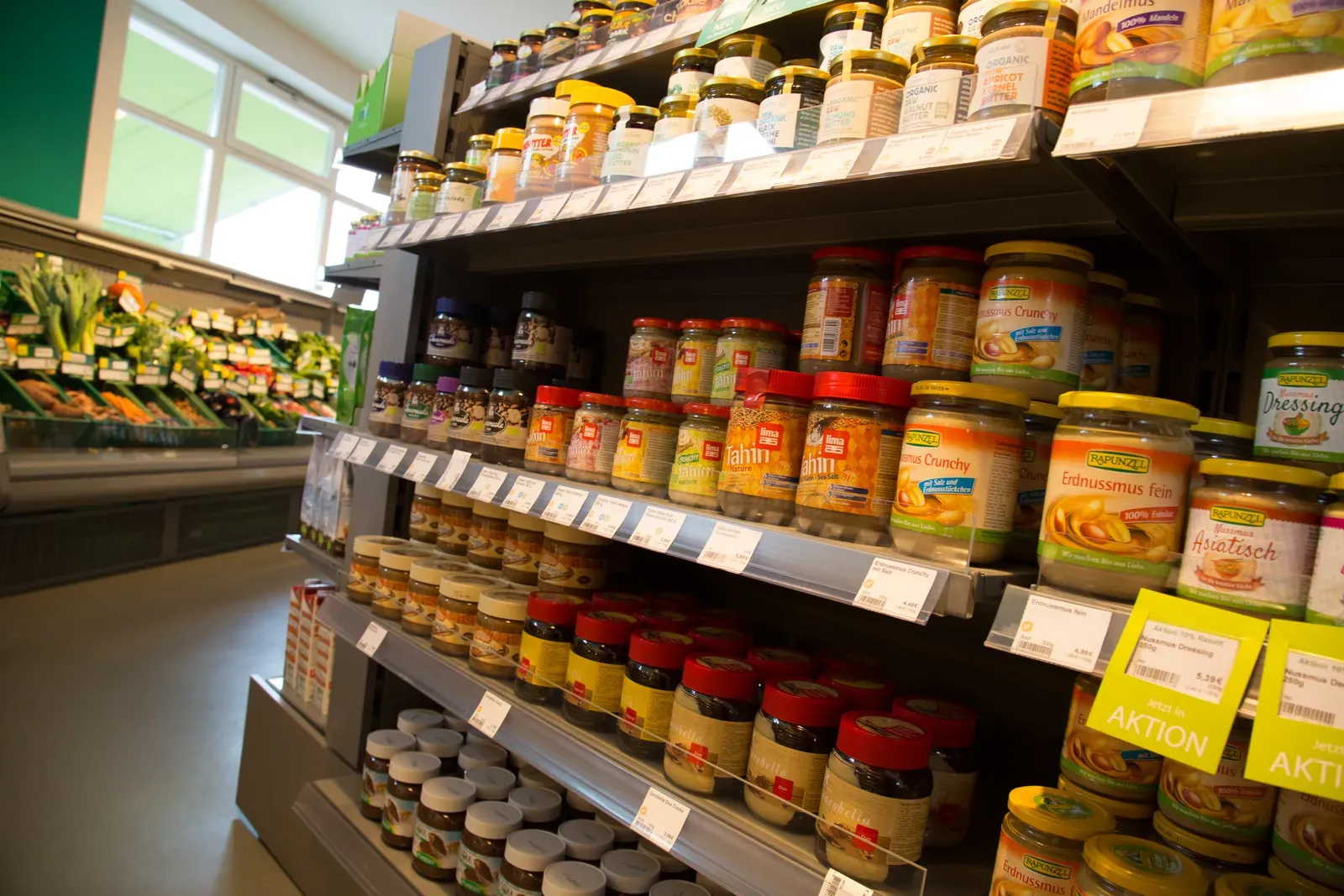
Here’s the thing: where a product lives on the shelf is not random. Not even a little. Grocery stores carefully design shelf layouts so that higher-margin products appear at eye level, where they attract the most attention. Cheaper alternatives or store brands are frequently placed on lower or higher shelves where customers may overlook them. Think of the shelf like a piece of prime real estate. The eye-level slot is Manhattan, and the bottom shelf is a suburb nobody visits by choice.
Retail research consistently shows that eye-level positioning significantly increases sales. Because shoppers tend to scan shelves quickly, they often grab the first familiar product they see without comparing nearby options. Manufacturers pay significant slotting fees to grocery retailers precisely to secure that prime shelf real estate. Markups, slotting fees, pay-to-stay arrangements, shrinkflation, and strategic product placement all contribute to a pricing landscape that rewards manufacturers with the deepest pockets and penalizes shoppers with the fewest options.
Looking slightly above or below eye level often reveals similar products at noticeably lower prices. Once shoppers understand how shelf placement shapes their decisions, they can avoid paying extra simply because an item was placed in the most visible spot. It genuinely takes just a few extra seconds to glance up or crouch down, and the savings can be surprisingly real. This is one trick where the solution is almost embarrassingly simple once you know it.
4. AI-Powered Dynamic Pricing: You Might Be Paying More Than Your Neighbor

This one is perhaps the most unsettling development in recent grocery pricing history. Many U.S. shoppers who order grocery deliveries through Instacart have been unknowingly part of widespread AI-enabled experiments that price identical products differently from one customer to the next, sometimes by as much as 23 percent. To put that into perspective: you and your neighbor could order the exact same box of crackers at the same moment and pay entirely different prices.
A study from Groundwork Collaborative and Consumer Reports looked at nearly 200 grocery shoppers in four U.S. cities that used Instacart and shopped for the same products at the same time. At one store in Seattle, a box of crackers was $3.99 for some shoppers, while for others it was $4.89, a roughly one quarter difference. In Washington, D.C., a dozen eggs cost $3.99 for some shoppers but $4.79 for others.
The study found that price differences could ultimately cost a typical family of four an extra $1,200 per year in grocery spending. That is not a small number. Overall, roughly three quarters of all grocery items were offered at varying prices, the survey data showed. The FTC took notice: the Federal Trade Commission issued orders to eight companies seeking information on surveillance pricing in July 2024.
Experts warn that algorithmic pricing, when combined with artificial intelligence and the massive amounts of personal data collected on U.S. consumers, could evolve into a more pernicious pricing strategy called “surveillance pricing,” which involves using personal characteristics, behaviors, and shopping history to set individualized prices. It’s a chilling idea. The good news: prompted by the investigation, Instacart stopped offering technology that allowed grocery retailers to charge shoppers different prices for the same groceries at the same time as of December 2025.
5. Loyalty Card Two-Tier Pricing: Saving Money or Being Manipulated?

Loyalty programs feel like a win for shoppers. Scan your card, get the discount, feel smart. But the mechanics behind these programs deserve a closer look. There has been a growing trend in the use of loyalty pricing by supermarkets, offering exclusive discounts to customers who sign up to loyalty schemes. However, this practice has raised growing concerns among stakeholders and consumers about fairness and the potential creation of a two-tier pricing system.
A sizeable minority of shoppers do not trust that the loyalty price is a genuine saving on the usual price for that product. A significant proportion of grocery shoppers consider it unfair that lower prices are only available to loyalty scheme members. Over half of grocery shoppers think that non-member prices during a loyalty price promotion are generally higher than the price usually charged for the product. That concern is widespread and understandable.
Kroger, one of the nation’s largest grocery chains, has acknowledged using demographic data and purchase history in the various promotions and discounts it routinely offers its loyalty program members. This means not all shoppers are getting the same deal, even within the same loyalty program. According to Forrester’s 2024 Consumer Benchmark Survey, about 85% of U.S. online adults belong to at least one retail loyalty program, with grocery, credit card, and pharmacy programs leading in popularity. By 2026, this means an immense volume of consumer data is continuously flowing into retailer systems, shaping marketing strategies and personalized shopping experiences.
6. Quantity Promotions: “3 for $10” and the Illusion of Obligation
Bulk-style promotions like “Buy Two, Get One Free” or “3 for $10” can appear like obvious bargains. However, these deals are often structured to encourage shoppers to purchase more items than they originally intended. Retailers know that many customers interpret these promotions as mandatory bundles rather than optional pricing tiers. In reality, you rarely need to buy three of something to get the discount rate. The sign just makes it feel that way.
In reality, stores sometimes allow customers to buy a single item at the same per-unit discount, but the larger promotion headline makes it feel like buying more is the only way to save. As a result, shoppers may leave the store with extra products they did not need. Consumer behavior studies show that quantity-based promotions increase total spending even when the per-item savings are small.
Buy one, get one free is an old sales tactic, but it’s an effective one that has recently regained popularity among businesses trying to encourage cost-conscious consumers to make purchases. Companies often use variations of this discount tactic, such as buy one, get the second 50 percent off. The trick is that your attention fixates on the discounted item and you mentally ignore that you’re still paying full price for one. It’s almost elegant in how well it works.
7. Price Anchoring: Making You Feel Like You Got a Deal

Imagine you walk up to an olive oil display. There’s one bottle for $14.99 and another, clearly fancier, for $22.99. Suddenly, the $14.99 bottle feels like a steal. That’s price anchoring at work. Price anchoring is the strategy of presenting a higher-priced item alongside a more affordable alternative, helping the lower-priced option appear like a better deal, even if it’s still profitable for the store. The key detail there is “still profitable for the store.”
Price anchoring recognizes that consumers tend to depend too heavily on an initial piece of information, the anchor, when making decisions. The research findings on price anchoring reveal the strong influence of an initial reference point on consumer decisions. Whether through product discounts, purchase quantity limits, or framed promotions, consumers were consistently found to rely heavily on the anchor, adjusting their evaluations and purchase behaviors in ways that favor the business.
Black Friday advertisements, for instance, prominently display higher “original” prices to the left of lower sales prices, so consumers reading the higher anchor price first are more impressed by the discount. Grocery stores apply this same logic across the aisles every single day. Placing a $14.99 olive oil beside a $22.99 imported brand encourages customers to choose the mid-range product, often boosting its sales and margin. You think you’re being frugal. The store is simply steering you toward its most profitable option.
8. Fake Sale Tags and the “Was / Now” Illusion
That big red “SALE” sticker on the shelf is one of the most powerful psychological triggers in a grocery store. But here’s the thing: not every sale is what it looks like. Another pricing tactic gaining attention involves promotional sales that are not as generous as they appear. Retailers sometimes mark an item with a bright “sale” tag even when the discount is minimal or temporary compared with its normal pricing cycle. In some cases, prices may even rise slightly before a sale begins so that the advertised discount appears larger.
Research shows a temporary price reduction or “special offer” is enough to influence roughly four in five consumers to consider a new product or brand. That’s an astounding number, and it explains why supermarkets lean so heavily on sale signage. Roughly two thirds of consumers have made an impulse purchase based solely on a special deal, coupon, or discount offer. The red tag is doing a lot of heavy lifting.
Industry analysts say this tactic works because consumers tend to remember the price of familiar items rather than their exact size. Savvy shoppers are starting to compare unit prices, such as cost per ounce or gram, rather than relying on packaging. Once people begin checking these numbers, pricing illusions become easier to spot, revealing how subtle tactics can quietly raise the real cost of everyday groceries.
It’s worth taking a step back the next time you see a sale tag and asking a simple question: was this item cheaper last month without any fanfare? A few seconds of critical thinking at the shelf can save real money at the register.
Conclusion: Your Cart, Their Strategy
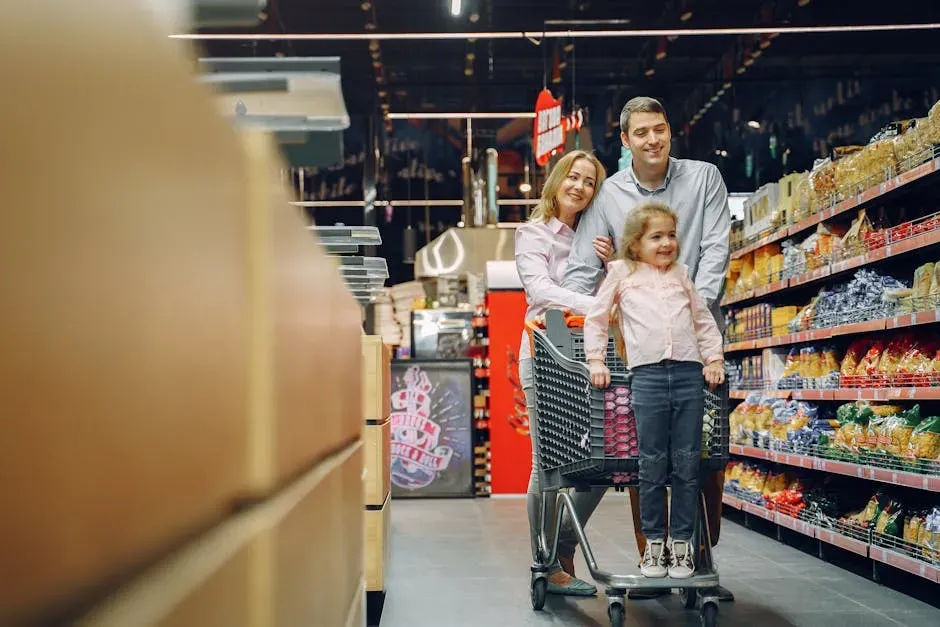
Grocery stores are not your enemy. But they are businesses, and every square inch of that store, every price tag, every sticker, and every shelf layout exists for a reason. Between 2020 and 2024, an average family of four spent an additional roughly $8,300 on groceries over the period, and knowing why prices feel the way they do is one of the few tools shoppers have to fight back.
The good news is that awareness is genuinely powerful here. Once you know that the eye-level product isn’t necessarily the best deal, that a “3 for $10” sign doesn’t always mean you have to buy three, and that a red sale tag deserves a second look, you start shopping differently. Slowly but surely, those receipts start looking a little more reasonable.
So next time you head to the store, bring your list, check the unit prices, and spend an extra second glancing at the bottom shelf. The savings won’t always be dramatic, but they add up in ways that matter. What would you have guessed was costing you the most?