
There was a time when owning a Gucci bag, a Burberry trench, or a pair of Louis Vuitton sneakers felt like a golden ticket to some invisible upper circle. Status was stitched into the lining. Prestige was part of the price. For decades, the world’s biggest fashion houses seemed untouchable, their allure impervious to economic downturns, shifting tastes, or cultural backlash.
But something has changed. And honestly, the numbers are jarring. The personal luxury goods market shed roughly 50 million customers between 2022 and 2024, dropping from 400 million to 350 million globally. This isn’t a blip – it’s a structural shift. The brands that once defined aspiration are now scrambling to figure out why the world has moved on. Let’s dive in.
1. Gucci – The Icon That Lost Its Voice
Gucci was, for a long time, the definition of maximalist luxury. Bold prints, gold hardware, that unmistakable GG monogram. It was the brand you wore when you wanted the whole room to know it. Then came a string of creative misfires that, combined with shifting market dynamics, sent it into a genuine freefall.
Gucci ended 2024 with revenue of approximately €7.65 billion, marking a steep decline of 23% year-on-year – the brand’s weakest top-line performance since 2020. That’s not a soft landing. For fiscal 2024, the brand’s recurring operating income dropped 51% compared to 2023. Half. Gone.
Gucci is the brand that lost the most value in the Interbrand rankings, falling sharply by 35.2% of its value, with Zara replacing it in the fashion top five. Let that sink in. A fast-fashion chain now occupies the ranking space where Gucci once stood. The brand’s 25% drop in Q1 sales is a result of its drift from bold storytelling to trend-chasing, which has diluted its identity and consumer loyalty.
The shift from exclusivity to volume-centric expansion also led to the brand’s downfall, especially once it abandoned its bold storytelling. The appointment of a new artistic director in 2025, Demna, further signals problems in the same direction, as Demna seems to be steering the brand towards streetwear and casualwear, which might be alienating long-time consumers who valued a heritage-based identity.
2. Burberry – Britain’s Most Embarrassed Export
Burberry is one of those cases that genuinely stings to watch. Nearly 170 years of British heritage, the iconic check pattern, the trench coat that defined a generation. Yet somehow, it found itself in the most embarrassing position of any legacy luxury brand in recent memory.
According to Kantar’s BrandZ rankings, in 2024, Burberry’s brand value fell by $2 billion – a 42% plunge compared to 2023. The almost 170-year-old brand also got kicked out of FTSE 100, Britain’s most well-known stock index, as a result of a loss in sales and dwindling profits. Getting removed from the FTSE 100 is the institutional equivalent of a public shaming.
During the two-year period from January 2023 to December 2024, which saw all major luxury brands struggle, Burberry fared the worst, per Morningstar. Stocks fell by 56%, while the company faced internal problems with top leadership on top of bad industry trends. Probably the biggest mistake Burberry made was trying to shift upward towards the ultra-luxury segment, which ended up out-pricing its loyal customer base – this happened before the brand axed its boss Jonathan Akeroyd after two years of declining sales.
Numbers for Q3 fiscal 2026 have seen some improvements with new CEO Schulman bringing the brand narrative back to British heritage. It’s a start, but regaining trust after alienating your core customer is a slow, painful road.
3. Louis Vuitton – The Crown Is Slipping
Here’s the thing about Louis Vuitton: it’s still the world’s most recognized luxury fashion brand. Nobody is disputing that. But there’s a growing sense that the shine is fading, and the data is starting to back that feeling up in uncomfortable ways.
While Louis Vuitton retained its position as the world’s most valuable fashion brand in 2025, it still faced a 4.91% loss in value, down to $48.4 billion per Interbrand. Meanwhile, parent company LVMH had to succumb to Hermès in market capitalization for the first time in history. Losing the top spot to Hermès, even briefly, is significant symbolism.
Louis Vuitton’s customers have had to face a hike in prices as high as 30 to 50% in just a few years. Meanwhile, the brand has been following a general industry-wide trend where bags are no longer as artistic or as durable as they used to be – allegedly focusing more on meeting production numbers than maintaining standards in quality.
In the first half of 2025, LVMH saw net profit fall 22% as its key fashion and leather goods division missed expectations. The division, home to brands including Louis Vuitton, Dior and Celine, recorded a 9% drop in organic sales in the second quarter. Consumers are noticing the gap between the price tag and the experience. And when people feel cheated, they walk.
4. Dior – Slipping Despite the Glamour
Dior has managed to maintain more cultural relevance than many of its peers, largely through strong visual storytelling and high-profile celebrity partnerships. It even climbed rankings at Brand Finance in 2025. But don’t let those headline wins distract from some troubling underlying numbers.
Dior suffered a 2% year-on-year decline in Q1 2025, per Investing.com, with its wines and apparel suffering the most at 8% and 4% drops respectively. This also led to a slump in share prices. Dior was also one of the brands that took the biggest hit in terms of consumer expectations – the percentage of people willing to choose Dior over other brands while making a purchase fell from 13.4% in late 2024 to 11.1% in 2025, per YouGov.
Dior experienced a more pronounced drop in YouGov’s consumer consideration score, from 12.9% to 11.1%. That might look like a small percentage swing, but in a brand universe where image is everything, losing nearly two points of consumer consideration in a matter of months is a genuine warning sign.
Improvement seen at the end of 2024 now seems an anomaly as LVMH’s key fashion and leather goods business, home to the Louis Vuitton and Dior brands, reverted to 5% sales declines, noted Deutsche Bank. Dior is fighting hard, but it’s fighting on multiple fronts simultaneously.
5. Chanel – The Price Hike That Went Too Far
Chanel is an interesting case. It recently overtook Louis Vuitton in Brand Finance’s brand value rankings, which sounds impressive. Look closer, though, and you’ll find a brand that is facing its own form of consumer backlash, particularly from its most loyal shoppers in China and the United States.
In 2024, Chanel faced a 4.3% loss in revenue, while operating profits slumped by 30%, per Business of Fashion. This was the first time the brand stood at a net loss since 2020. A 30% operating profit collapse is not a minor adjustment. That’s a serious alarm bell.
Over the past three years, like-for-like price inflation in soft luxury has been “significantly ahead” of its long-term average, and well into the double digits, according to Bernstein. “Brands like Chanel have led this escalation, and most have followed,” the bank noted. Chanel’s long-time customers in China, who are sick of luxury brands that are not worth the money, seem to have found alternatives to traverse the continuous hike in prices. At some point, even devoted fans say enough is enough.
6. Versace – Sold Off and Struggling
Versace once meant one thing: unapologetic, maximalist luxury with an almost theatrical confidence. Donatella’s reign kept the brand in the cultural conversation for decades. But the numbers behind the glamour tell a very different story, one that eventually led to the brand being sold to Prada in 2025.
In April 2025, Capri announced it would sell Versace to Prada for $1.375 billion – a stunning loss after failing to capitalize on the legacy of the brand. When Capri first acquired Versace back in 2018, they had visions of growing its revenue to $2 billion. Instead, Versace fell from $1.1 billion in fiscal 2023 to $821 million in fiscal 2025.
Popularity with Versace has declined with newer generations, partly because the brand neglects its environmental footprint – a decision which hasn’t sat well with a more environmentally aware generation. Versace has also been eliminating lower-priced items, preventing newer generations from getting a foot in the door of Versace products.
Versace also saw a notable decrease in YouGov’s consumer consideration score, from 9.3% to 7.9% in early 2025. Being sold to Prada could be its saving grace or just a change of hands – it remains to be seen whether new management can revive the boldness the brand once carried so effortlessly.
7. Michael Kors – The “Luxury-ish” Trap
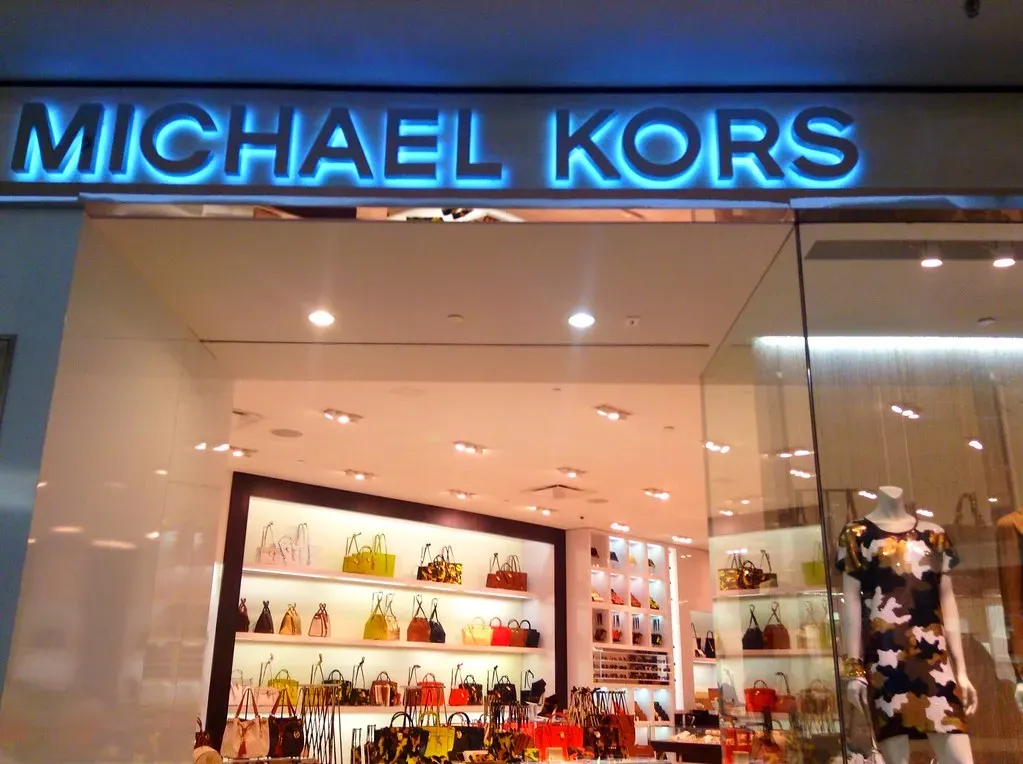
Let’s be real: Michael Kors was always somewhere between accessible luxury and aspirational fashion. That middle-ground positioning worked brilliantly for a while. Then came a catastrophically misjudged pricing strategy that alienated exactly the customers who made the brand successful.
Revenue for Michael Kors fell to $2.75 billion for the full year, down from $3 billion the prior year. Its Americas revenue, which made up 68% of total sales, dropped 10%, while Asia fell 27%. The company posted a $547 million net loss, driven by a $602 million non-cash impairment charge. The brand’s attempt to push higher price points on handbags and ready-to-wear backfired, forcing it into a more promotional stance to win back its core customer.
The overcorrection led to steep discounting, eroding brand image and profitability. The company has since reversed course, bringing certain handbag price points back down to historical levels. Nothing destroys a luxury image quite like needing to run sales to move inventory. Once you start discounting, the perception of premium is almost impossible to reclaim.
8. Balenciaga – A Scandal Hangover That Won’t Go Away
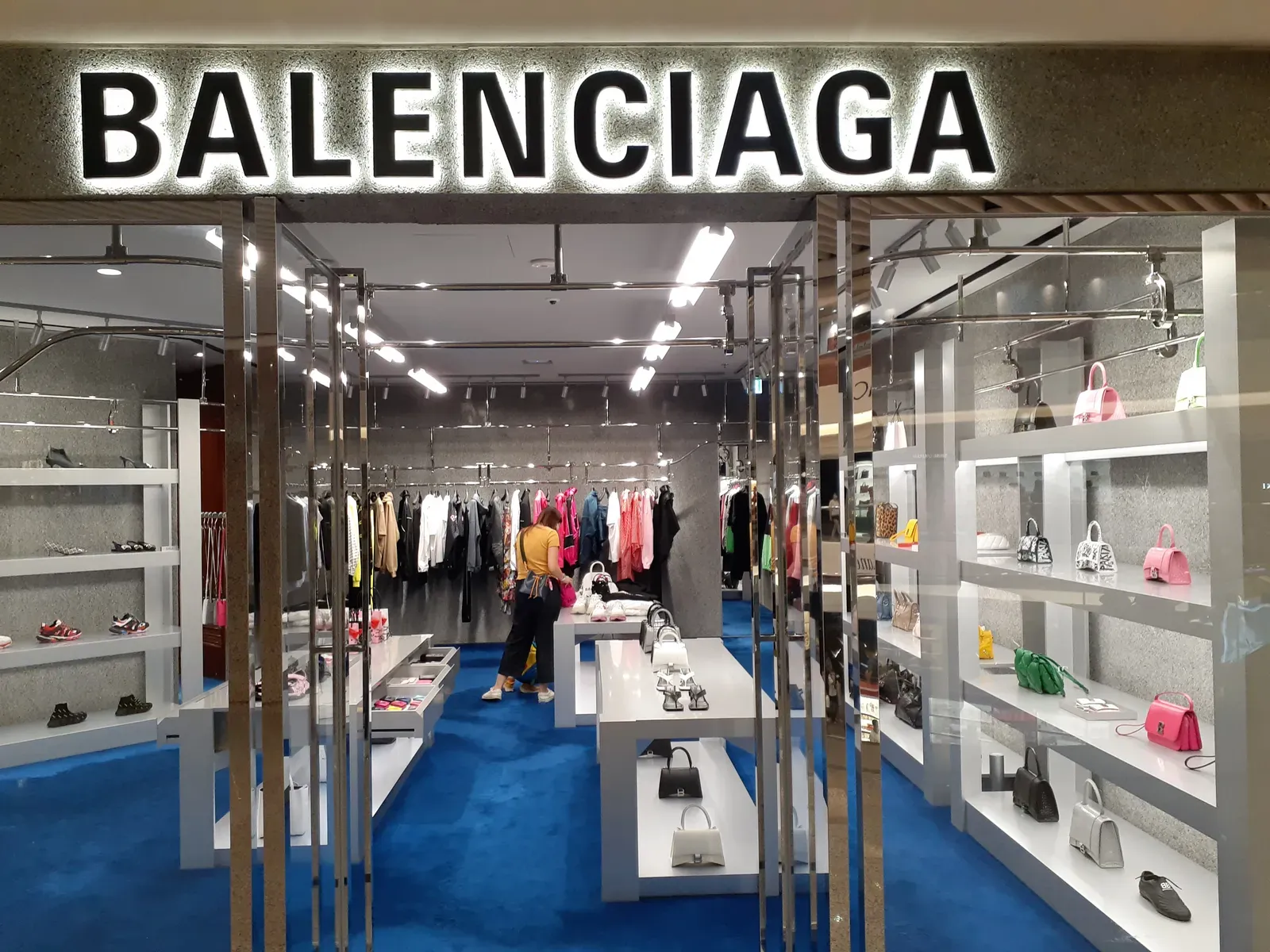
Balenciaga was doing something genuinely fascinating under Demna – blending high fashion with internet culture, distressed aesthetics, and an almost ironic relationship with consumerism itself. Then came the deeply damaging 2022 campaign controversy, and the brand has been dealing with the aftershocks ever since.
Kering is still reeling from the impact of the controversial Balenciaga ad campaign, which hurt its U.S. and European sales. Kering’s other houses saw combined revenue declines, with operating income drop of 80% and a wholesale dip of 21%. Operating income declines were attributed in part to “significant reinvestment in communications at Balenciaga.” Rebuilding brand trust is expensive.
Revenue dropped 8% cumulatively at Kering’s other houses in 2024, which include Balenciaga, Alexander McQueen and Brioni. The Other Houses segment continues to be weighed down by Balenciaga’s wholesale rationalization and Alexander McQueen’s weaker performance. Now with Demna moving to Gucci, Balenciaga faces yet another creative transition – and another period of uncertainty for a brand that has already stretched its audience’s patience.
9. Yves Saint Laurent – The Quiet Underperformer

YSL doesn’t make headlines the way Gucci does, and that’s part of the problem. In the current era of luxury, silence is not sophistication – it’s invisibility. While the brand maintains a certain intellectual cache, it has consistently underperformed across almost every key financial metric over the past two years.
Sales at Yves Saint Laurent fell 9% year-on-year to €2.88 billion in 2024, alongside declines in Kering’s other houses. In the first half of 2025, Yves Saint Laurent reported €1.3 billion in sales, down 11%. That’s a brand that was once considered a consistent performer inside Kering’s portfolio, now dragging on the group’s bottom line.
Yves Saint Laurent’s directly operated retail network sales were down 12% in Q3 2024, with wholesale revenue down 20% on a comparable basis. The brand has been trying to reinvent iconic handbag lines to generate renewed interest, but those efforts are happening against a backdrop of broad consumer disengagement with mid-tier luxury. It’s a tough market to stand out in when you’re neither the cheapest nor the most prestigious option on the shelf.
10. Jimmy Choo – Losing Its Glass Slipper Moment
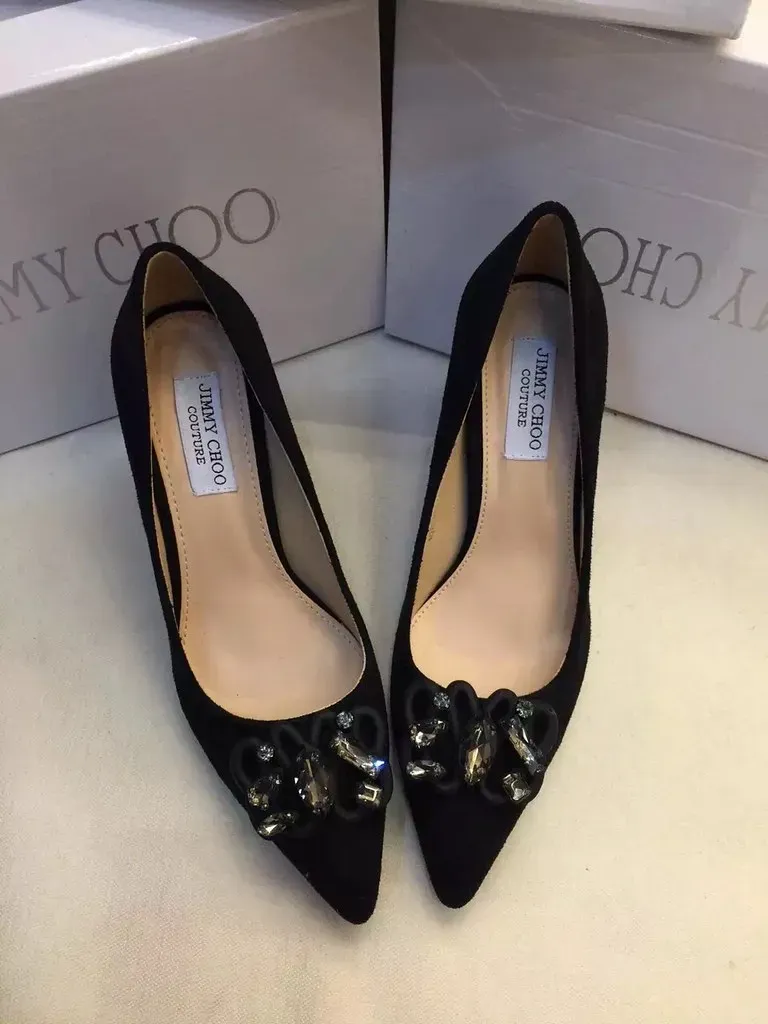
There was a time when Jimmy Choo shoes were a genuine cultural icon – Sex and the City, red carpets, aspirational femininity made tangible. Somewhere along the way, the magic faded. The brand is now part of a holding company portfolio struggling to justify its own existence, with declining numbers across virtually every key market.
Jimmy Choo reported $600 million in revenue for fiscal 2025, with a low single-digit negative operating margin. Versace revenue fell 15% to $193 million in one quarter alone, while revenue at Jimmy Choo dropped about 4% to $159 million. The brand is shrinking across every geography it operates in.
Jimmy Choo also saw widespread declines, with the biggest drop coming from Asia, where revenue fell 17%. Capri is also rumored to be looking to sell Jimmy Choo, which would essentially mark the end of the brand’s ambitions as a standalone luxury powerhouse. When your parent company wants to sell you, the “elite” label has a hard time sticking.
11. The Luxury Market as a Whole – An Industry at a Crossroads

It would be easy to blame any one brand for its own decline. But honestly, the problem runs deeper than creative directors or mispriced handbags. The entire luxury sector is grappling with a structural shift that no single rebranding campaign can fix overnight.
For years, luxury brands thrived by simply raising prices. Between 2019 and 2023, roughly four-fifths of luxury growth came from price increases rather than higher sales volume, per Bain and Co. But this strategy is now hitting a wall. Consumers are pushing back against never-ending price hikes, and the market is starting to cool.
The global luxury sector in 2025 faced its most significant disruptions and potential setbacks in at least 15 years, driven by mounting economic turbulence and shifting social and cultural dynamics. Worldwide luxury spending is coming under intensified pressure as consumer confidence is eroded by economic upheavals, geopolitical and trade tensions, and financial market volatility.
The industry faces what some experts have described as an “existential crisis,” with changing values among younger consumers forcing luxury brands to adapt their strategies and cultural positioning. By 2025, roughly seven out of ten dollars spent on luxury will come from Millennials and Gen Z, according to Bain & Company – and this generation is driving a shift toward sustainability, digital integration, and experiences that go far beyond simply owning a product. The brands that understand this will survive. The ones clinging to the old playbook are already behind.
Conclusion
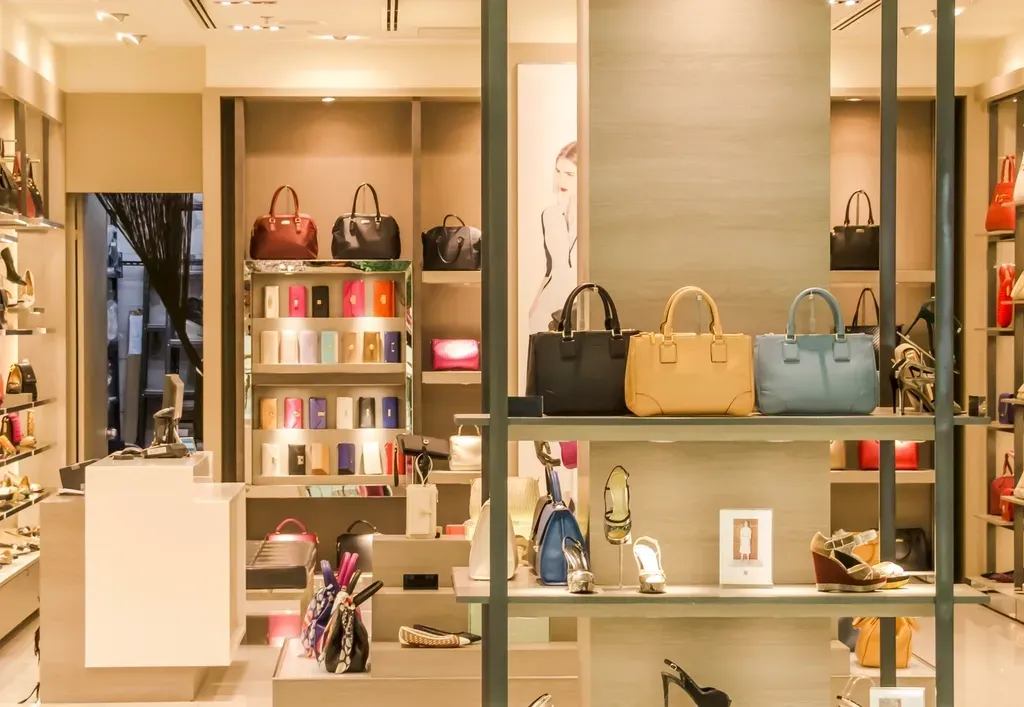
The luxury industry built its empire on one core promise: that some things are simply worth more because of what they represent. Craftsmanship, exclusivity, heritage, aspiration. When brands abandoned that promise in pursuit of volume – flooding markets, hiking prices without matching quality, and chasing trends instead of setting them – they broke the agreement with their most loyal customers.
The data is unambiguous. In what has been just the third such instance in three decades, the global luxury industry has lost revenue for two consecutive years. Bernstein analysts recently lowered their sales forecast for the sector to a decline of 2%, against a previous forecast for 5% growth – a drop that would mark the industry’s longest downturn in over two decades.
The elite status these brands once held was never guaranteed. It was earned, and then, for many of them, gradually traded away for short-term gains. The question now is whether they can earn it back. What do you think – can these iconic names reclaim their prestige, or has the era of logo-driven luxury permanently passed? Tell us in the comments.