
America’s relationship with fast food is complicated. We grumble about the prices, debate the nutrition labels, and yet we keep going back. Some chains are busier than ever. Others are shuttering locations at a rate that should genuinely alarm their shareholders. What’s actually going on behind those drive-thru windows? Let’s dig in.
Table of Contents
The State of Fast Food in America Right Now

The numbers tell a pretty sobering story for the industry overall. Chain restaurant sales grew just 3% in 2024, according to the Technomic Top 500 Chain Restaurant Report, as consumers frustrated by high fast-food prices shifted spending from traditional, big-name players to smaller, up-and-coming names – or simply stayed home altogether.
The 500 largest chains generated $437.1 billion in 2024, but that 3.1% increase did not come close to the 4.1% menu-price inflation that year, meaning the group as a whole actually lost a percentage point of customer traffic. Think about that for a second. The industry looked like it was growing on paper, but in reality, fewer people were walking through those doors.
Almost 40% of all Top 500 chains saw sales declines on a year-over-year basis in 2024, a notable uptick from 26% in the prior year. So this isn’t a story of a few bad apples. It’s a structural shift, and the chains that understand it are the ones winning right now.
#1: McDonald’s – Still the King, But the Crown Is Slipping a Bit
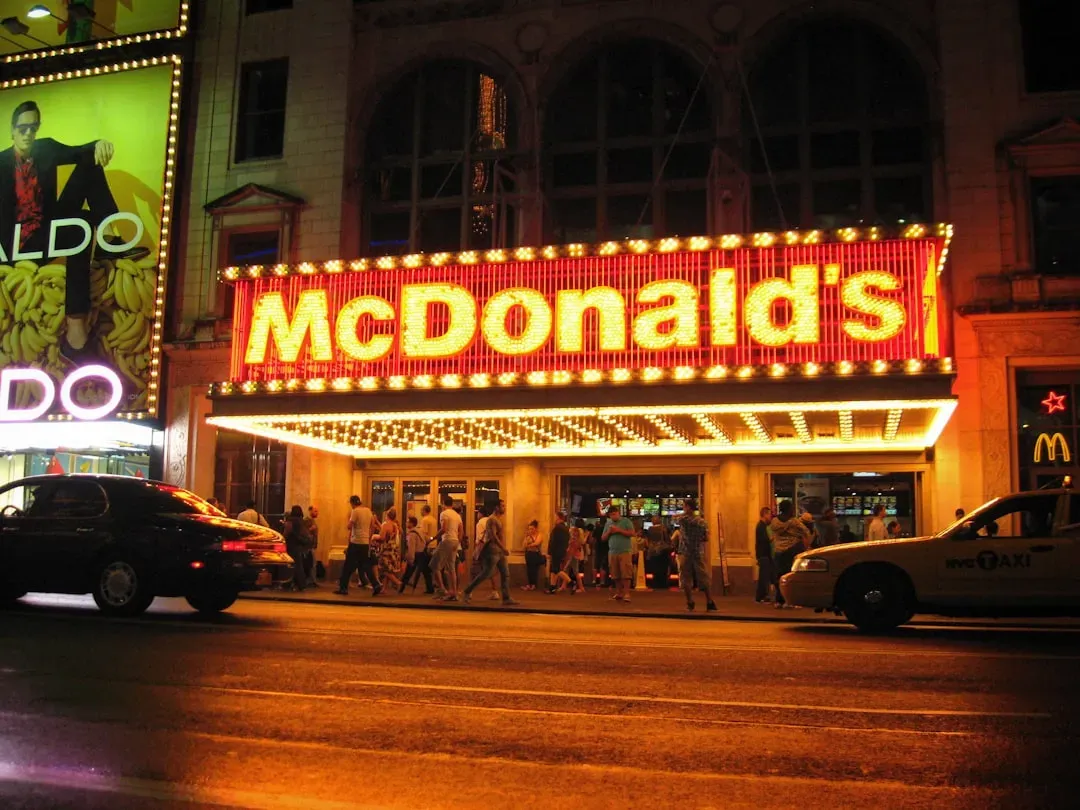
McDonald’s retained the top rank with $53.5 billion in U.S. systemwide sales, relying on value strategies and organizational changes, despite facing a sales dip tied to an E. coli outbreak. The Golden Arches are still standing, but they wobbled more than usual in 2024.
An E. coli outbreak linked to slivered onions in Q4 2024 resulted in a 1.4% drop in U.S. same-store sales, leading McDonald’s to invest $100 million into a recovery initiative. That’s a staggering sum just to win back customer trust – and honestly, it underscores just how fragile brand loyalty can be in the age of social media.
While McDonald’s only dropped one point in the ACSI rankings – from 71 to 70 – it earned the lowest score among all major chains in 2024 and takes that distinction again in 2025. Still the biggest by far in raw sales, but the satisfaction picture is complicated. McDonald’s used its $5 Meal Deal as a cornerstone of its McValue platform to counteract consumer pullback, especially from lower-income guests.
#2: Chick-fil-A – America’s Undisputed Customer Satisfaction Champion
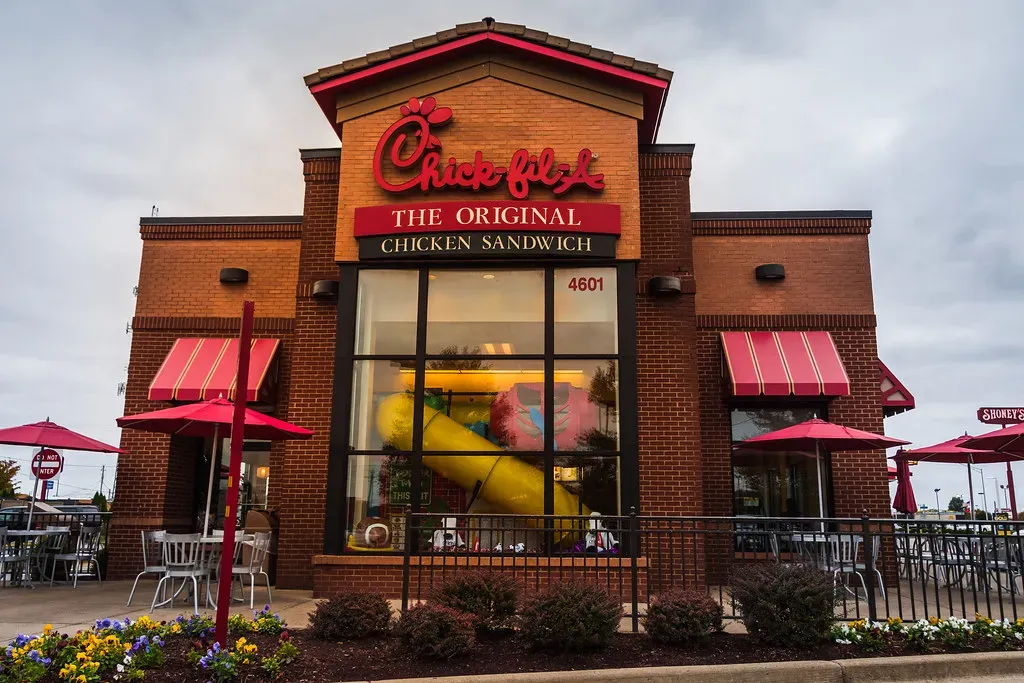
Here’s something remarkable. Despite every pressure the industry faced in 2024, Chick-fil-A kept doing what it does best. Chick-fil-A leads the industry for the 11th year in a row with a steady ACSI score of 83. Eleven consecutive years at the top of customer satisfaction. That’s not luck – that’s operational discipline.
Chick-fil-A continued to generate unrivaled sales volumes at scale in 2024, posting the highest average unit volume in the QSR 50 and reaching $22.7 billion in systemwide sales. Among domestic franchised freestanding or drive-thru-only units, the median annual sales volume was $9.227 million per location. For reference, that’s more than double what the average McDonald’s location generates.
The brand announced ambitious international expansion plans, including a $100 million rollout in the U.K. and a $75 million initiative in Asia. Chick-fil-A continues to impress on the home front: in Intouch Insight’s 2025 drive-thru study, the chain earned 99% customer satisfaction across 165 secret shopper visits. Honestly, those numbers are almost too good to be true. Almost.
#3: Taco Bell – The Value Winner That Keeps Reinventing Itself
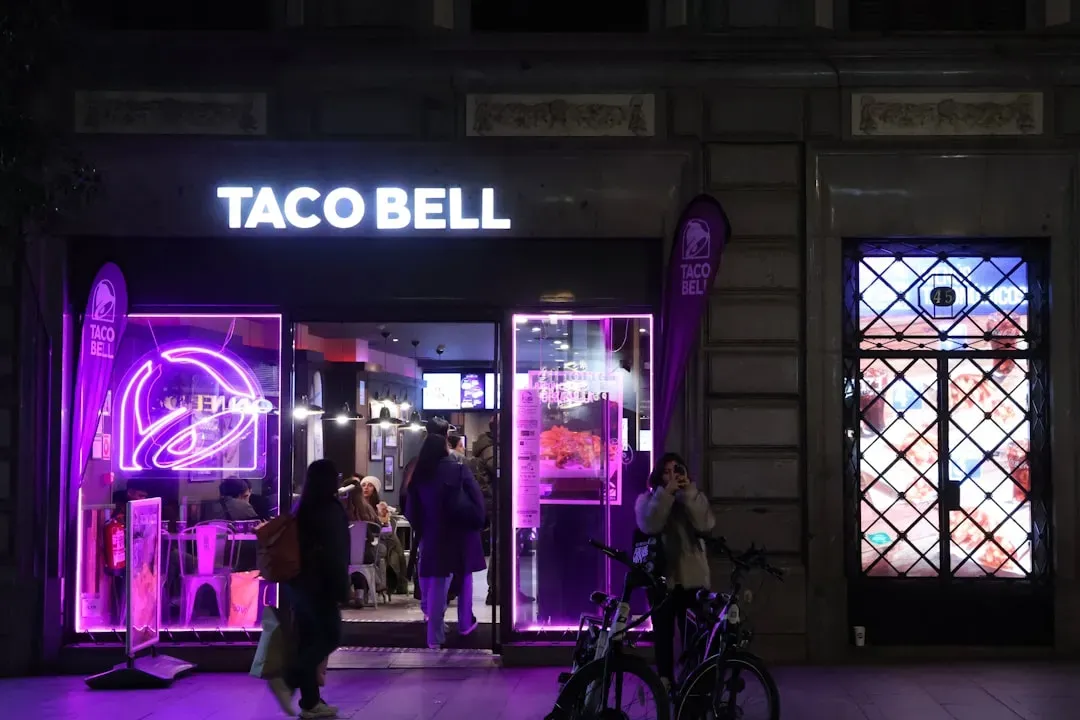
Taco Bell has emerged as one of the standout success stories of 2025 and early 2026. While many legacy fast-food chains struggled, Taco Bell kept ringing the bell – literally. The chain reported a record $1 billion in profit in 2025. Let that sink in: a billion dollars in profit at a chain where most menu items cost under five dollars.
Taco Bell’s strong performance continued in 2025, with sales growing 8.1% to $16.2 billion, standing out among limited-service Mexican chains. The brand also leads in speed of service and total drive-thru time, according to Intouch Insight’s 2025 drive-thru study. Fast, affordable, and surprisingly inventive – it’s a formula that works especially well when consumers are keeping a close eye on their wallets.
Like other value-focused brands, Taco Bell is gaining traction from lower-income consumers and going directly after traditional fast-food chains on value. Taco Bell detailed an aggressive strategy aimed at expanding its footprint, doubling menu innovation, and driving average unit volumes and digital sales dramatically higher by 2030. If you’re betting on fast food’s next decade, this is the horse many analysts are backing.
#4: Raising Cane’s – The Fastest-Rising Star in the Industry
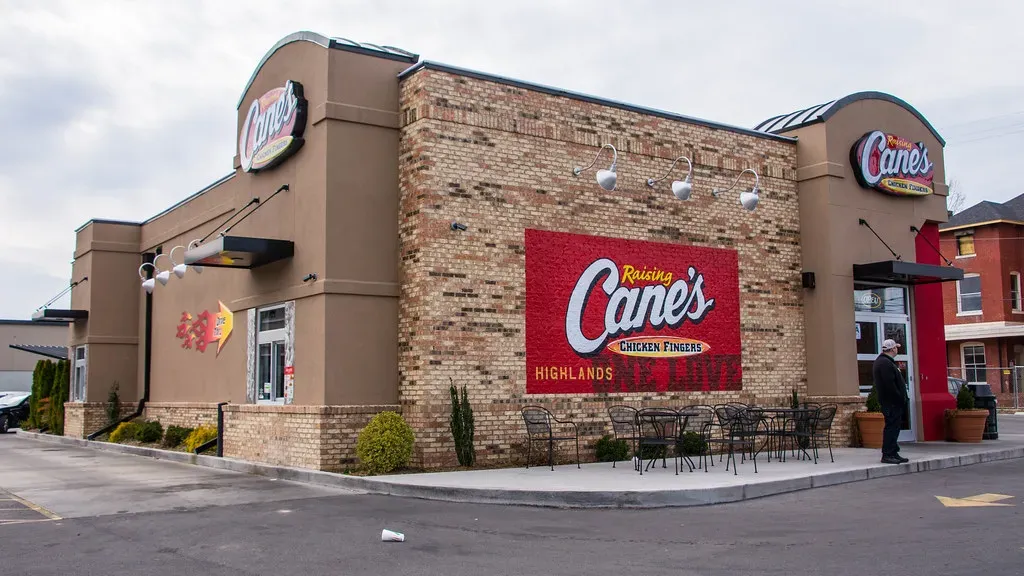
If you told someone a decade ago that a chicken-finger chain from Louisiana would overtake KFC in U.S. sales, they’d have laughed at you. Nobody’s laughing now. Raising Cane’s system sales grew 32% in 2024, to nearly $5 billion, achieved through a combination of unit growth of 14% and higher average unit volumes, which are now $6.6 million.
Raising Cane’s is now the third-largest chicken chain in the U.S. by sales, trailing only Chick-fil-A and Popeyes, and the privately held company leapfrogged KFC by keeping its menu simple and operating its own restaurants. The simplicity angle is key. While competitors pile on new menu items every quarter, Cane’s essentially sells chicken fingers and sauce. That’s it. And it’s working spectacularly.
In recent drive-thru performance studies, Raising Cane’s tied with Chick-fil-A for first place in food quality, and 88% of secret shoppers rated its employees as friendly and approachable. The chain is on track to operate nearly 1,000 restaurants by the end of 2026. Growth at this pace is genuinely rare in the fast-food industry.
#5: Wingstop – The Digital-First Disruptor Nobody Saw Coming
Wingstop doesn’t get as much mainstream attention as some of the giants, but the data is hard to ignore. Wingstop achieved sales increases of more than 30% in 2024, propelling it into the top 25 for the first time, alongside an elite group that included Dave’s Hot Chicken at 57%, Cava at 33%, and Raising Cane’s at 32%.
A full 30 chains opened 100 locations or more in 2024, led by Starbucks, Jersey Mike’s, and Wingstop, which entered the Top 25 for the first time. Wingstop has aggressively leaned into digital ordering and delivery – think of it as a fast-food chain built for the smartphone generation. The model avoids heavy in-store foot traffic dependence, which turns out to be a genuine competitive advantage.
The performance of Raising Cane’s and Wingstop underscores a clear trend through 2025: consumers increasingly shifted visits away from traditional chains toward newer brands with more focused menus. Limited-service chicken chains saw sales grow nearly 9% last year. It’s a chicken revolution, plain and simple – and Wingstop is right at the center of it.
#6 (Losing): Subway – A Slow-Motion Collapse the Industry Has Never Seen Before
It’s hard to write about Subway without feeling a little sad. This was once the world’s largest restaurant chain by location count. Now? The numbers are brutal. Subway closed 631 restaurants in 2024, leaving it with 19,502 locations in the U.S., marking the eighth consecutive year in which Subway has shuttered locations in its home country.
At its peak, Subway boasted more than 27,000 stores in 2015, and since then their numbers have been steadily dropping, with approximately 7,600 closings. The sandwich chain finished 2024 below 20,000 domestic units, marking the first time the brand has been under that threshold in about 20 years. That’s nearly one third of an entire empire, gone.
The core challenge for the brand has been its low unit volumes, though Subway did generate its highest average unit volumes in history at $490,000 per location in 2024. Still, that figure remains strikingly low compared to rivals. Last year’s unit volumes increased just 1% compared to 2023, meaning the average Subway unit actually lost customers after factoring in 4% menu price increases.
#7 (Losing): KFC – Losing the Chicken War It Once Dominated
KFC invented American fried chicken fast food. It still carries the Colonel’s image on every bucket. Yet the chain is losing – and losing badly – to brands that didn’t even exist a generation ago. The dubious distinction of the largest single drop in the American Customer Satisfaction Index from 2025 to 2026 goes to KFC, which fell from a score of 81 to 77 out of 100.
Raising Cane’s surpassed KFC in the Technomic rankings, and KFC is now the fourth largest chicken chain in the country after its sales declined 5.2% to $4.9 billion. In the first quarter of 2025, KFC’s U.S. same-store sales shrank 1%, its fifth straight quarter of declines, and it now ranks as the fifth-largest chicken chain, trailing both Cane’s and Wingstop by U.S. sales according to Technomic data.
KFC’s menu has become sprawling, from bowls to waffles – a trend that could have inadvertently helped Raising Cane’s and its simple offerings gain ground. I think there’s a lesson here. In a world of endless customization, sometimes doing one thing exceptionally well is the stronger play. KFC tried to be everything to everyone and ended up being less of a priority for many.
#8 (Losing): Panera Bread – The Identity Crisis No One Wanted to Watch
Panera Bread built its reputation on fresh-baked bread, warm soup, and the idea that fast food didn’t have to feel like fast food. Then, slowly and painfully, it started drifting away from exactly that. Around the start of 2024, there were already signs that Panera Bread might not be around much longer, and the issues it was facing seem to have only gotten worse given the volume of customers who noticed the quality drop-off in 2025.
In July of 2025, the chain announced it would no longer prepare its own fresh dough – and for those who were already starting to feel uncertain about the state of Panera, this decision was just about the opposite of what the chain needed to win back goodwill. Giving up fresh dough is a bit like a bookstore deciding to stop selling books. It misses the entire point of what made people care in the first place.
In a Reddit thread about overrated fast food chains, the two comments with the most upvotes – more than twice as many as the third-most upvoted comment – mentioned Panera. Online sentiment is not always the most scientific measure, but when your brand repeatedly tops “most overrated” lists, that’s a signal worth taking seriously. The concept still has loyal fans, but the trust gap is widening fast.
What the Winners Have in Common – and What the Losers Ignored
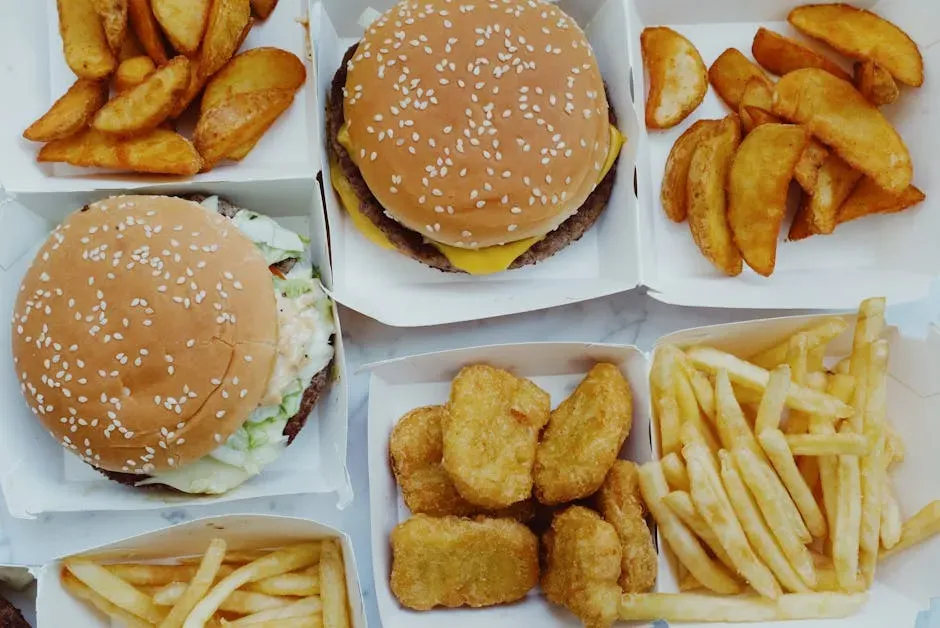
Look at the chains gaining ground and a pattern emerges. Focused menus. Strong value perception. A clear identity. Raising Cane’s sells essentially one thing. Taco Bell owns the value conversation. Chick-fil-A is relentless about service quality. These aren’t accidents – they’re strategic choices executed with discipline.
Limited-service burger, pizza and sandwich chains – more traditional fast-food – grew sales less than 1% last year. The chains losing ground tend to be broader, blurrier, and slower to respond to what customers are actually telling them. From noticeably smaller portions and higher prices to declining customer service standards, these slippages have become increasingly apparent. According to a 2026 ACSI survey, for every chain that improved in customer satisfaction, two chains saw their scores drop by a point or more.
The hard truth is that Americans haven’t stopped loving fast food. They’ve just gotten more selective about which fast food they love. The brands that respect that shift are thriving. The ones that don’t are closing drive-thrus that no one asked them to close. What do you think – did any of these rankings surprise you? Drop your take in the comments.