
There is something almost magnetic about a beautiful antique china set. Maybe it is the weight of history in each piece, or that quiet thrill of holding something that once graced a royal table. Whatever the reason, the market for fine antique china remains surprisingly robust – and in some cases, downright jaw-dropping. Prices at the world’s top auction houses have confirmed what serious collectors have known for decades: the right set is never just tableware.
From imperial Chinese dynasties to the court of Marie Antoinette, these pieces carry stories that most modern objects simply cannot match. Some of the entries on this list will surprise you. Let’s dive in.
Table of Contents
1. Qing Dynasty Imperial Porcelain Sets
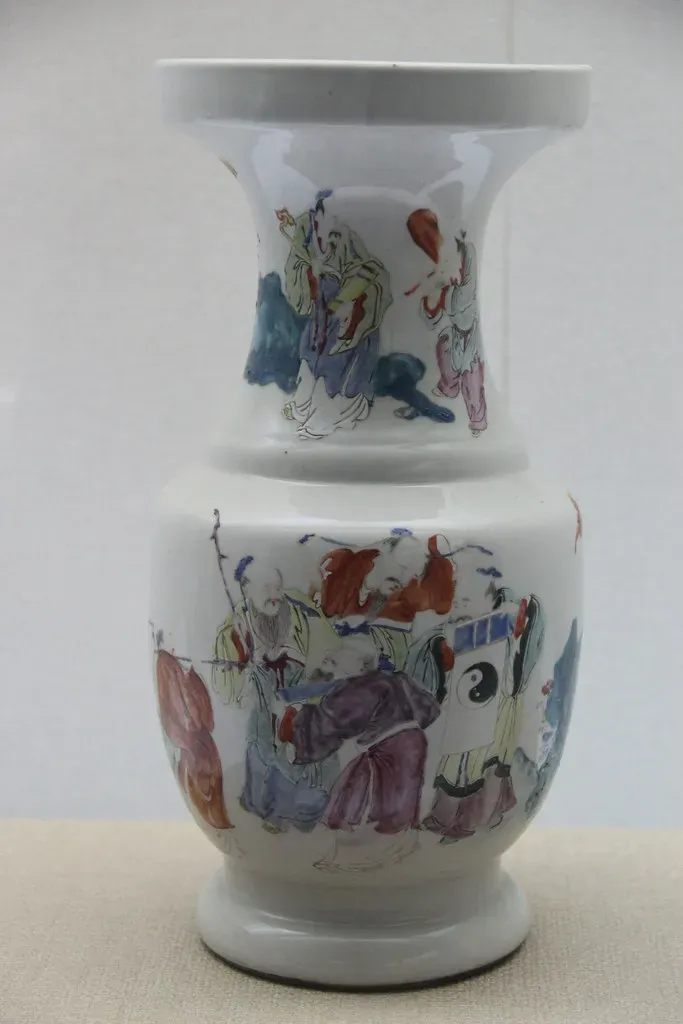
Qing Dynasty porcelain is not merely china. It is a slice of history auctioned to the highest bidder, and the finesse in craftsmanship along with the tales of imperial China encapsulated in each piece make them a collector’s dream. Honestly, no other category of antique china commands the kind of reverence – and the kind of money – that Qing pieces do.
The astronomical price of $84 million fetched by a Qing Dynasty porcelain piece stands as a testament to its unrivaled value in the fine china market. These figures are not outliers. Falangcai, which can be translated as “foreign colours,” are among the rarest and most celebrated imperial ceramic wares of the Qing dynasty. Unlike most other wares of that period, the production of falangcai was small in scale, subject to close scrutiny by the Emperor, and made exclusively for the imperial court and royal family.
In 2006, an 18th-century imperial falangcai porcelain bowl sold for a whopping HK$151 million (US$19.3 million) at Christie’s Hong Kong. Seventeen years later, its owner offered this gem at Sotheby’s Hong Kong, and it eventually sold for HK$198 million (US$25.25 million), taking the crown as 2023’s most expensive Chinese ceramic sold at auction. That kind of appreciation over time is staggering.
2. Ming Dynasty Blue-and-White Porcelain
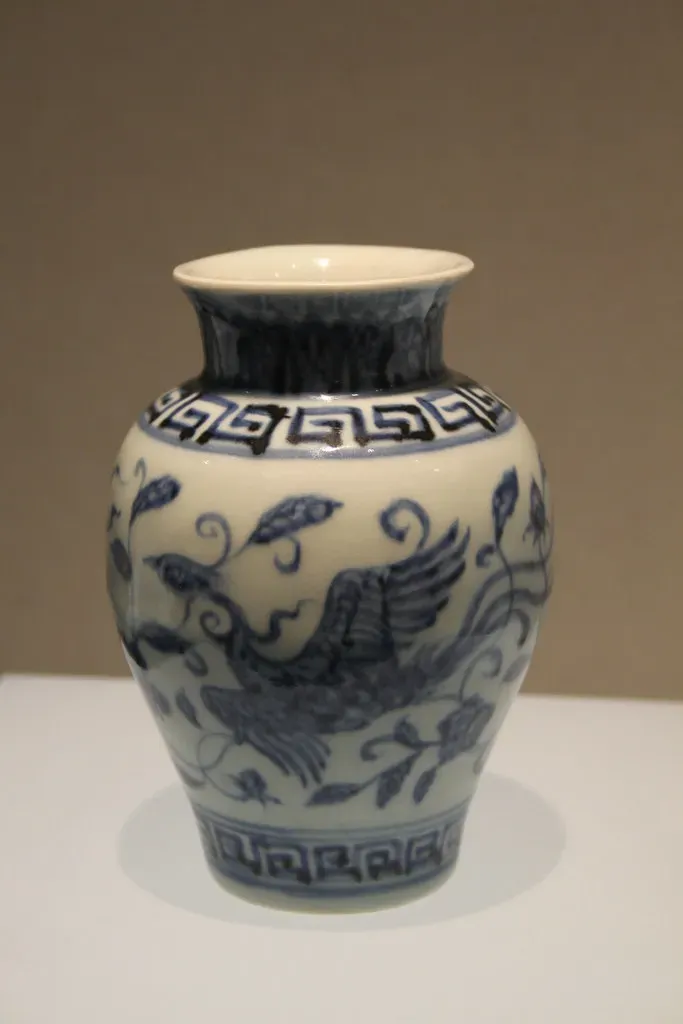
Arguably no other type of Chinese ceramics is more iconic than the blue-and-white porcelains, and those produced during the Yongle period (1403-1424) and Xuande period (1425-1435) of the Ming dynasty have always been considered the finest. There is a reason collectors around the world still chase these pieces with breathless intensity.
Connoisseurs of Chinese porcelain often considered the Xuande reign of the Ming dynasty a period of unparalleled innovation and mastery in design, especially for blue and white wares, where some of the most celebrated forms found their original prototype. Think of it like the golden age of vinyl records – the originals from that era are simply irreplaceable.
A stunning collection of rare Chinese porcelain from the Ming Dynasty ignited a fervent bidding war at Bonhams Hong Kong in August 2025. The highlight was a 15th-century blue-and-white vase that sold for approximately $3 million, exceeding pre-sale estimates by nearly fifty percent. The vase is one of only a few surviving examples from the Chenghua period (1465-1487). That kind of result tells you everything about where collector demand is right now.
3. Royal Copenhagen Flora Danica
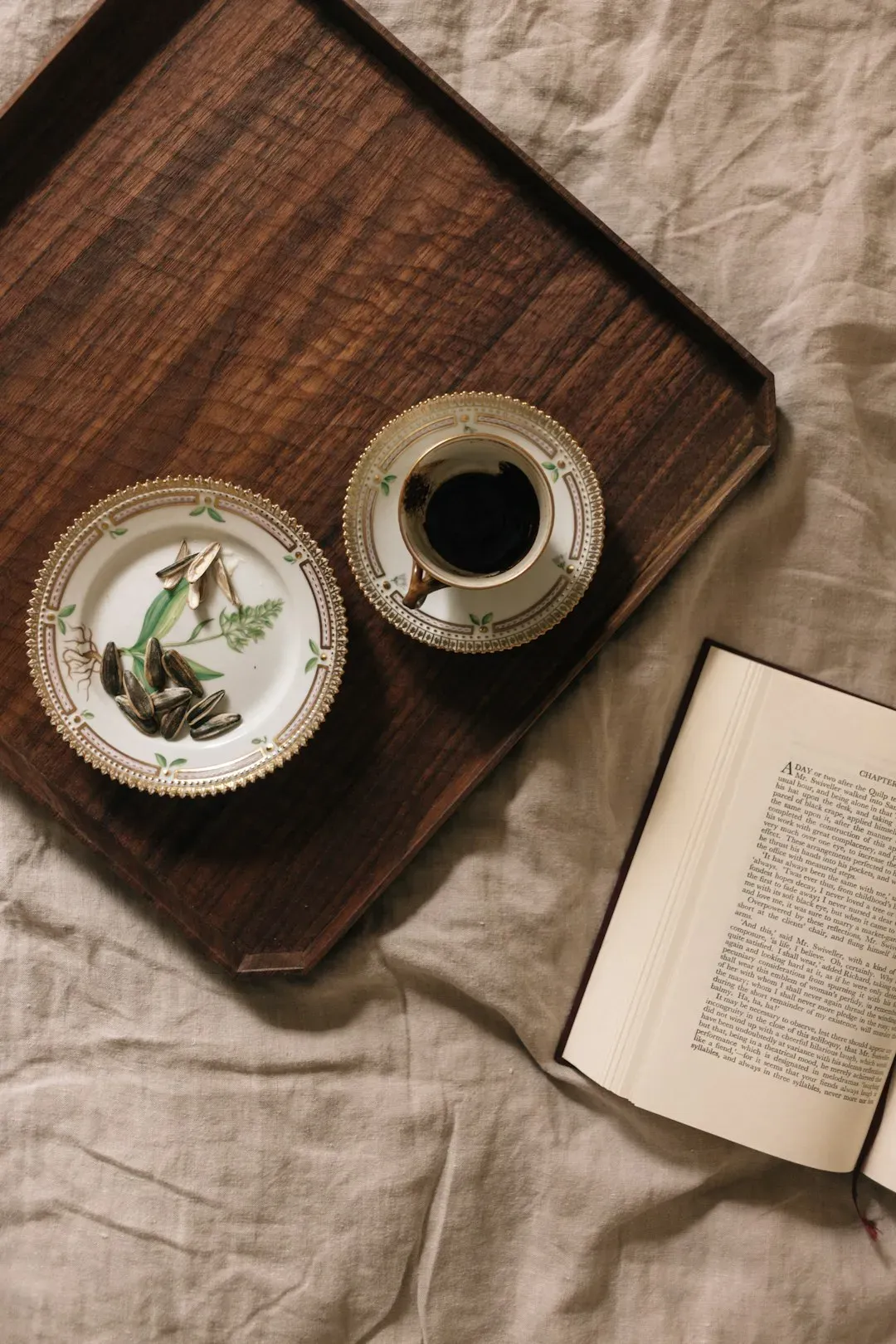
Flora Danica is a series of highly detailed botanical-themed porcelain dishware produced by Royal Copenhagen Denmark. First commissioned in 1790 by the King of Denmark himself, this line of dishware has an extensive history of unmatched quality and prestige. It is the sort of set that makes your jaw drop the moment you see it in person.
Although nearly 250 years have passed since the original Royal Copenhagen Flora Danica copper-plate designs were painted on porcelain for the Danish royal family, the beloved floral patterns remain highly collectible and relevant today. The first Flora Danica dinner service was commissioned by Denmark’s king as a gift to Russia’s Catherine the Great in 1790. That is a provenance story that simply writes itself.
Because of their complexity, each piece is made to order with a floral motif that is both unique and accurate to the source material. Royal Copenhagen has a catalog of 40 porcelain forms and approximately 3,000 floral motifs for the buyer to choose from. The Flora Danica pattern is one of the most valuable dinnerware lines in the world, and individual pieces can sell for thousands of dollars in the right conditions. A single dinner plate, for example, can sell for over $10,000.
4. Meissen Swan Service
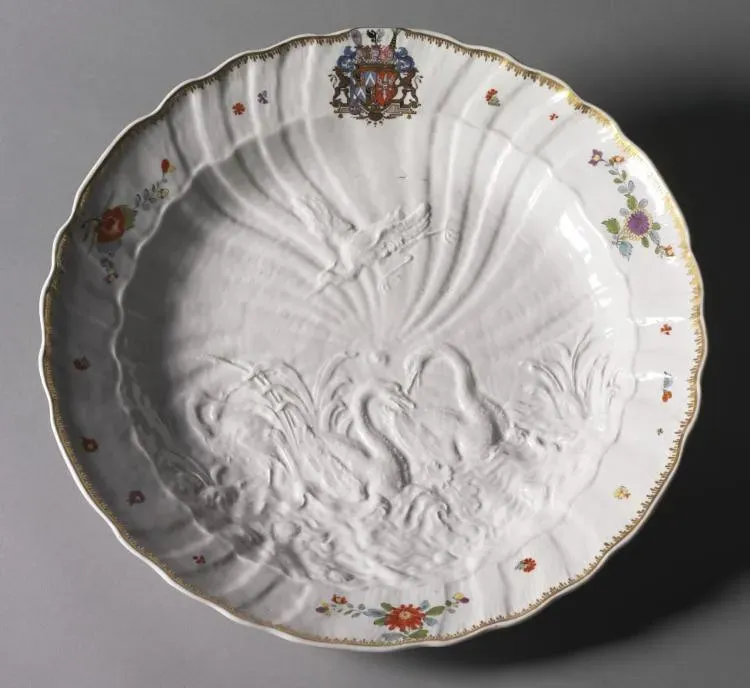
Here is the thing about Meissen – it is not just old. It is foundational. Meissen is the first manufacturer of hard-paste porcelain in Europe. August the Strong, Elector of Saxony, tasked the alchemist Johann Friedrich Böttger and physicist Ehrenfried Walther von Tschirnhaus to discover the secrets of creating white porcelain. In 1708 they succeeded, and in 1710 Augustus established the Royal Polish and Electoral Saxon Porcelain Manufactory at Meissen.
The Meissen Swan Service was created between 1737 and 1741 for Count Heinrich von Brühl. This elaborate Baroque table service features over 2,000 pieces modeled with swans, nymphs, and other aquatic motifs. In 2000, a single tureen from the set sold at Christie’s for $142,852. Imagine what an intact portion of such a service would command today. It is almost impossible to put a number on it.
The signature crossed swords mark, taken from the coat of arms of the Electorate of Saxony, was introduced in 1722 to proclaim the exceptional quality and authenticity of Meissen porcelain. Collectors know to look for this mark above all else. A confirmed, period Meissen set remains among the most coveted finds in the entire world of antique tableware.
5. Sèvres Marie Antoinette Pattern
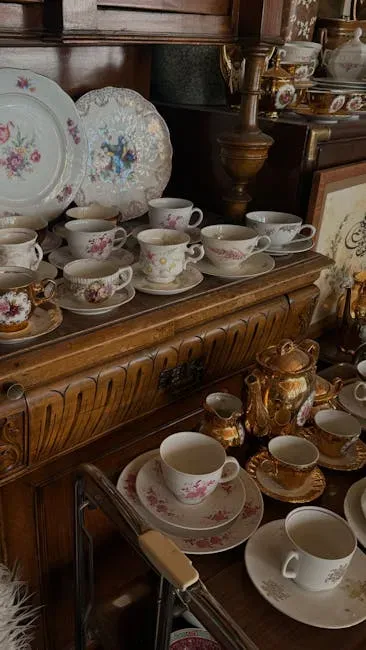
The Marie Antoinette pattern was originally created in 1782 for the personal use of Queen Marie Antoinette. It features green bands with blue flowers. Let’s be real – there are few names in history more guaranteed to ignite collector interest than Marie Antoinette, and a Sèvres set tied to her personal use is about as historically charged as tableware gets.
Auction results in recent years confirm that this pattern continues to hold serious value. An original 1832 set of 120 or more pieces sold for $60,480 in 2024, while a 20th-century reproduction set of over 80 pieces still commanded $30,000 in the same year. Even the reproductions are fetching serious prices – which says a great deal about how powerful the Sèvres brand name remains.
A replica Limoges Bernardaud set of over 90 pieces sold for $5,500 in 2024. For collectors on a more modest budget, this opens a real doorway into owning a piece of this storied history. Still, the genuine antique Sèvres pieces from the 18th and early 19th centuries are the ones that make rooms go quiet when they appear at auction.
6. Herend Queen Victoria
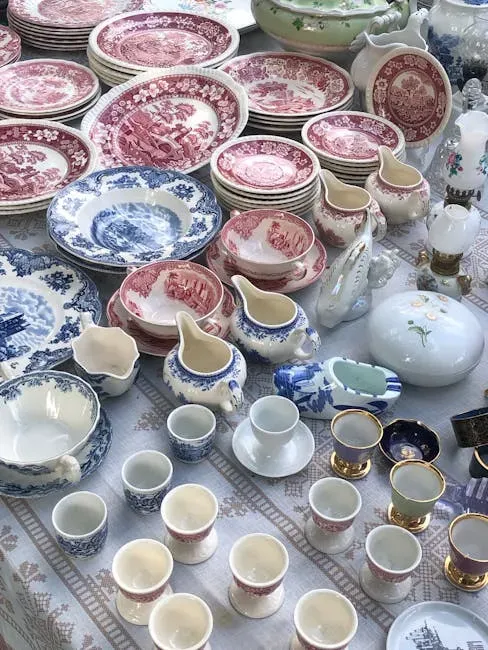
The china pattern that would become Queen Victoria was first presented during the London World Exhibition in 1851. There, it caught the eye of Queen Victoria, who ordered a large table service in the pattern for Windsor Castle. The pattern was subsequently named Queen Victoria and became one of Herend’s most popular designs.
The original set, introduced in 1851 at the First World Exhibition in London, was purchased by Queen Victoria herself. Subsequently named for her, this Chinese-influenced pattern demands the skills of Herend’s most talented and experienced painters. Each piece is handmade and hand-painted with 24-karat gold accents, which means no two sets are ever truly identical.
Auction records for this pattern are strong and consistent. A 120-plus piece set sold for $5,500 in 2025, while a 20th-century set of over 170 pieces sold for $9,500 in 2024. For collectors who want beauty, royal provenance, and ongoing demand, the Herend Queen Victoria pattern checks every box.
7. Qianlong Period Chinese Export Porcelain
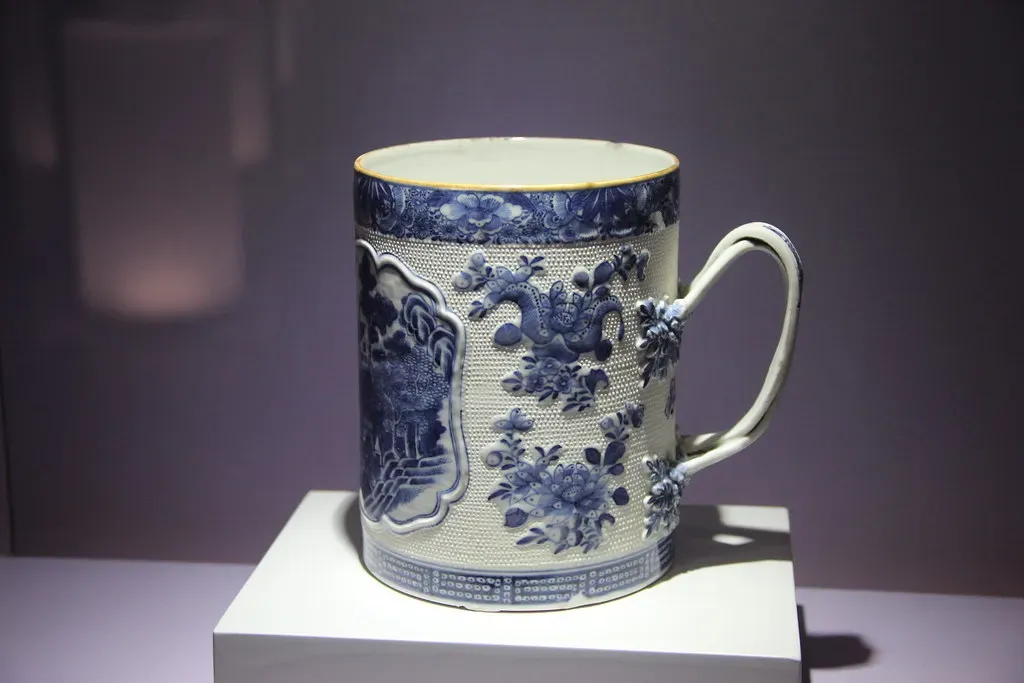
Pieces produced during the reign of the Qianlong Emperor (1735-1796) are highly prized for their fine quality and decoration. The Qianlong period is arguably the peak of Qing artistic output, and the export porcelain made during this era was crafted specifically to dazzle Western eyes – which it continues to do, centuries later.
Emperor Qianlong was extremely hard to please when it came to ceramics. He imposed exacting standards, enjoyed objects that were simulations of other materials, favored antiquity-inspired designs, and yet sought the curious for his amusement. The result was a body of work defined by extraordinary variety and relentless quality. It is hard to say for sure, but this dual ambition – precision and curiosity – may be exactly why these sets remain so compelling to modern collectors.
At the Wang Xing Lou Collection Sale held in October 2024 at China Guardian Hong Kong, all 11 lots sold at a one hundred percent sell rate, achieving a total of approximately US$7.26 million. The Wang Xing Lou collection was of such quality that it was exhibited as “Imperial Perfection: The Palace Porcelain of Three Emperors” at the Minneapolis Museum of Art, where it remained on loan for two decades. Sets with that kind of museum-backed provenance carry a level of authority that collectors find almost irresistible.
8. Meissen Blue Onion Pattern
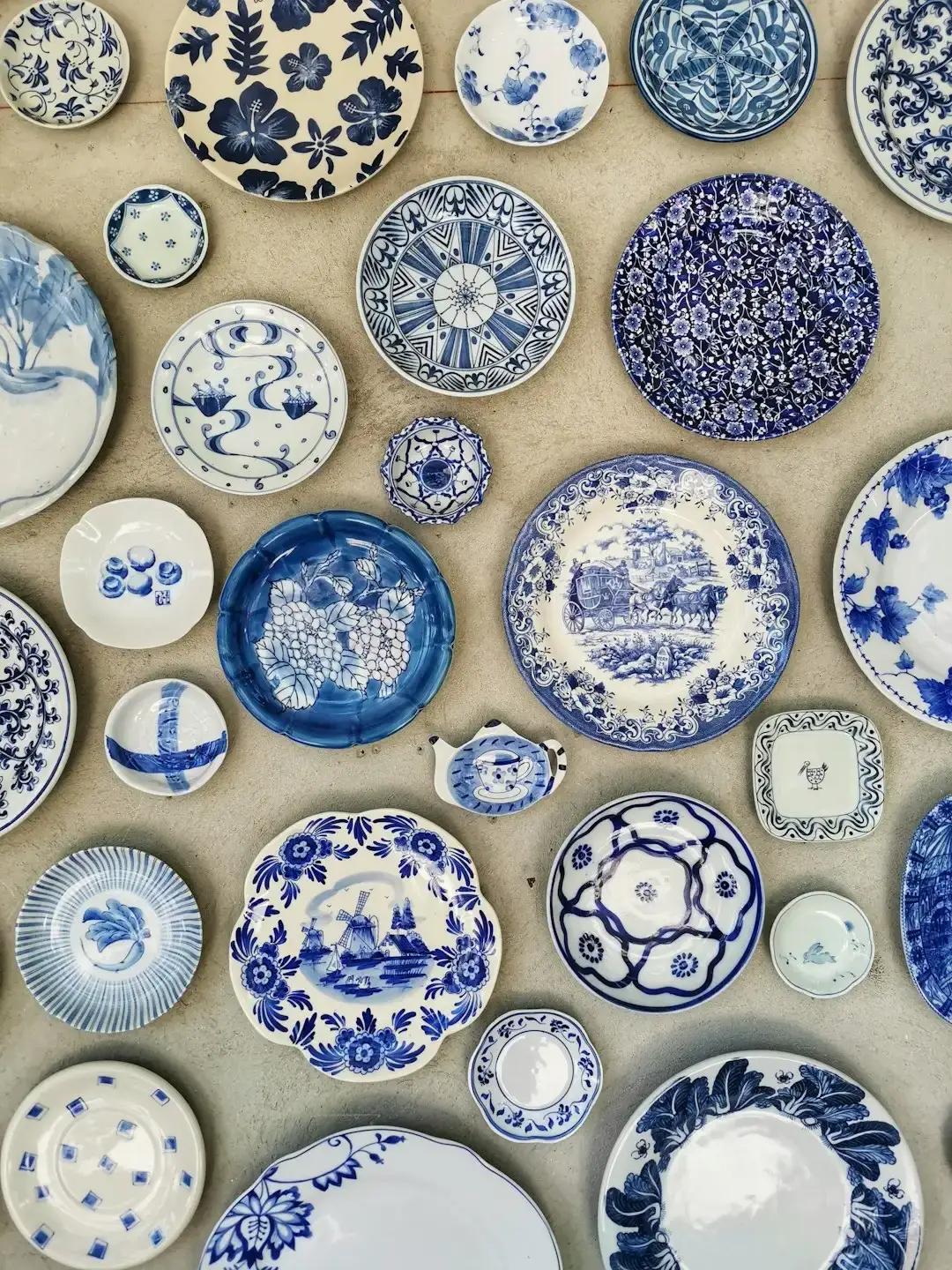
Blue Onion is an iconic blue and white pattern inspired by Chinese porcelains. European decorators misinterpreted the Chinese peaches and melons for onions. The pattern was introduced in 1739 and remains in production to this day. It is one of those patterns that somehow managed to be both wildly popular and consistently collectible at the same time – a rare balance in the antique china world.
What is especially interesting is that age and scale of a Blue Onion set can dramatically shift its value. A 19th or 20th century set of over 200 pieces sold for $23,894 in 2025. That is a significant sum for a pattern that many people assume is too common to be worth chasing. Here is the thing: the antique, large-format sets are anything but common.
China from top-tier companies like Meissen is usually more valuable than pieces from lesser-known factories. Certain artists, designers, and modelers can also add to the value. With Blue Onion, it pays – literally – to know your marks and your date codes. Chips, cracks, stains, crazing, and repairs all significantly lower the value of antique china. Pieces in mint or near-mint condition fetch the highest prices. For an antique Meissen Blue Onion set in exceptional condition, demand among serious collectors shows no sign of slowing down.
The world of antique china is anything but static. Auction records keep being broken, new collections keep surfacing, and the appetite from collectors in Asia, Europe, and North America continues to grow. Whether it is a royal commission or an imperial decree that started it all, each set on this list carries the kind of weight that no modern dinnerware can ever replicate. What would you have guessed is the most valuable set of the eight?