
Grocery shopping in 2026 is a whole different game than it was just a few years ago. Prices have climbed, budgets have tightened, and the checkout line has become something of a gut-punch experience for millions of American families. If you are working with a $6,000 annual grocery budget – which translates to $500 a month – you are actually remarkably close to what the data suggests is an achievable, realistic target for a single person or a very lean household.
The question is not whether you can survive on $6,000 a year for food. The real question is how to do it without feeling deprived, bored, or nutritionally shortchanged. These seven expert-backed strategies will help you squeeze every last dollar. Some of them might surprise you. Let’s dive in.
Table of Contents
1. Master Meal Planning Before You Ever Walk Through the Store Door

Here is the thing about impulse buying – it is the single biggest budget killer most people never even notice. One of the most effective ways to control grocery expenses is through meticulous meal planning. By outlining your meals for the week, you can create a focused shopping list that curbs impulse purchases and ensures you buy only what you need.
Meal planning might sound tedious, but it is one of the most effective ways to save money and reduce food waste. By mapping out your meals for the week, you will avoid last-minute takeout and impulse buys. Think of your meal plan like a GPS for the grocery store – without it, you are just wandering around making expensive wrong turns.
Think about how an ingredient can be used in multiple ways. A rotisserie chicken, for example, could be stretched for several meals by using it for sandwiches, soup, and a stir-fry. That is real money saved – one purchase doing the work of three separate meal decisions. Food experts sometimes call this “prepare once, eat twice,” and honestly, it is one of the simplest mental shifts you can make.
Another smart trick is reverse meal planning. This involves reviewing local store ads to see what is on sale and coming up with meals that use those discounted ingredients. You let the deals drive the menu, not the other way around. It takes a little getting used to, but once you try it, you will wonder why you ever did it any other way.
2. Switch to Store Brands and Stop Paying for a Logo

Opting for store-brand products can lead to significant savings without sacrificing quality. Many store brands offer products that are comparable to national brands at a fraction of the cost. Incorporating these items into your shopping routine can help lower your overall grocery bill while still providing your family with nutritious and tasty options.
In fact, many store-brand products come from the same manufacturers as big-name ones but cost much less. Try them – you may not even notice the difference. I think most people already suspect this but keep reaching for the name brand out of habit. Breaking that habit is worth real money.
Research shows that shoppers can save up to 30% just by opting for store-brand goods and shopping based on weekly promotions. On a $6,000 annual budget, that potential saving is not just loose change – it is transformative. Shopping at stores like Aldi, for example, can save families around $1,300 per year on groceries compared to traditional grocery stores.
3. Buy in Bulk – But Only the Smart Way
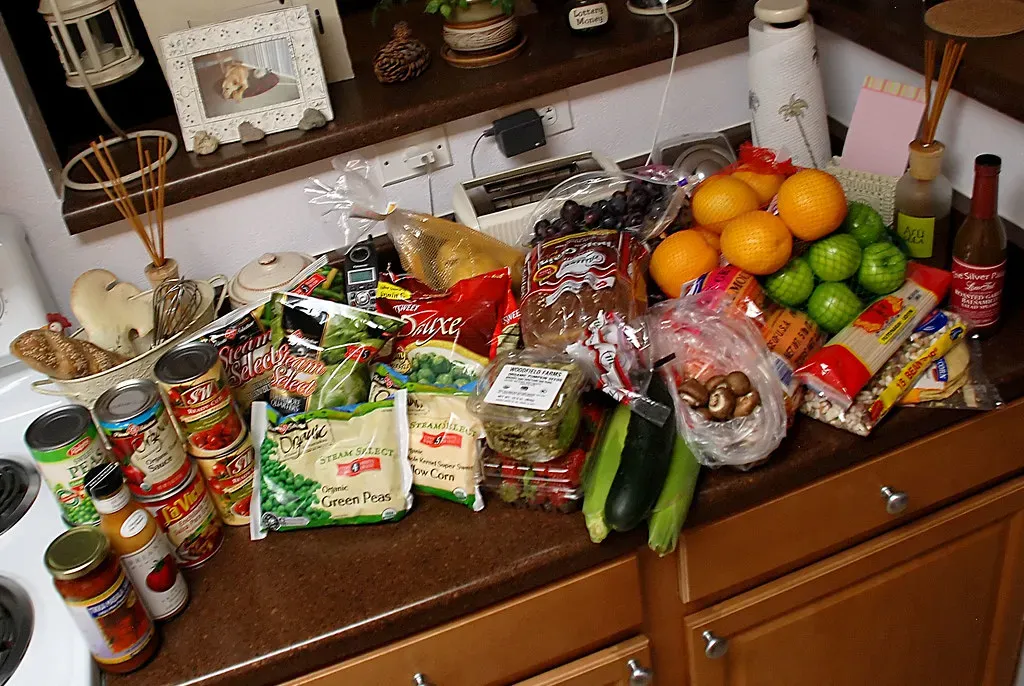
Buying in bulk can save money, but only if you actually use what you buy. Avoid waste by portioning out perishables and freezing what you won’t use right away. Shopping with a friend and splitting bulk items is another great way to save without overbuying.
Bulk shopping works best for items you use regularly and that do not spoil fast – like rice, beans, or pasta. For fresh foods, buy only what you can store or freeze. Otherwise, those “savings” turn into waste. It is a trap a lot of people fall into – buying a massive bag of something and then watching half of it go bad in the pantry.
Batch cooking is not just a time-saver – it is also a budget-friendly way to minimize waste and make your groceries stretch further. Try setting aside one day per month specifically for this purpose and you will be so glad you did. Meats, berries, and butter are among the items that can be easily frozen, allowing you to purchase in bulk and save for later. For instance, buy a value pack of meat, divide it into smaller portions at home, and double-wrap before freezing.
4. Lean Into Plant-Based Proteins to Cut the Meat Bill

Meat is almost always the most expensive item in any grocery cart. Beef and veal prices were 16.4 percent higher in December 2025 than in December 2024. The U.S. cattle herd has decreased in size since 2019, yet consumer demand has remained strong in the face of tighter supplies. In plain terms – beef is expensive, and it is not getting cheaper anytime soon.
Meat is often the most expensive part of a grocery bill. Try incorporating more plant-based meals – beans, lentils, tofu – a few times a week to cut costs without losing nutrition. Lentils and dried beans in particular are among the most protein-dense and budget-friendly foods you can buy. A bag of lentils costs roughly what a single chicken breast does and feeds a family multiple times over.
The plant-based evolution has been highlighted in Innova Market Insights’ Top Trends for 2026, which crowns “Authentic Plant-based” as trend number five. This year focuses on how consumers are embracing natural plant proteins for their added benefits, underscoring how plant-based is transitioning from imitation to nutrition. This is not just a trend – it is increasingly a financial strategy that food experts firmly back.
Beef and veal prices are predicted to increase 9.4 percent in 2026. Shifting even two or three meals per week away from red meat toward legumes, eggs, or canned fish can meaningfully protect your $6,000 budget from that category’s ongoing price pressure.
5. Use Digital Coupons, Loyalty Programs, and Cashback Apps Religiously

In the digital age, couponing has evolved beyond clipping from newspapers. Many stores offer digital coupons through their apps or websites, allowing you to save on items you regularly purchase. Additionally, cashback apps can provide rebates on specific products, adding another layer of savings. Staying organized and planning your shopping around available coupons can lead to substantial discounts over time.
Many grocery stores offer loyalty programs to entice customers to continue shopping at their stores in exchange for discounts and savings. They are typically free to sign up for, so be sure to find out on your next trip to the grocery store if your store offers one. This is genuinely free money sitting on the table. There is no good reason to ignore it.
According to a Purdue University survey, the majority of respondents – 82 percent – modified their shopping behaviors in 2025. The most common adjustments were seeking sales and discounts, switching to cheaper brands, and reducing nonessential purchases. The smartest shoppers are already using every digital tool available, and apps like Ibotta, Fetch, and store-specific platforms have become serious money-savers for households watching every dollar.
6. Fight Food Waste Like Your Budget Depends on It – Because It Does

Honestly, this one deserves more attention than it gets. The average household wastes nearly 30% of the food they buy. That is like throwing cash in the trash. On a $6,000 annual grocery budget, that waste could represent nearly $1,800 worth of food going straight into the bin every year. That is staggering.
In a November 2025 survey conducted by NielsenIQ and ReFED, Americans reported coping with elevated food prices by adopting meal preparation changes like using leftovers more (45%) and being more conscious of using up fresh foods before they go bad (40%), while roughly half reported cutting back on non-essential items at the grocery store.
Stop wasting hard-earned money by using up what you have. Plan “clean-out-the-fridge” meals like stir-fries, soups, or omelets to use up odds and ends. Frozen veggies and fruits are just as healthy as fresh ones and last much longer. They are usually picked at peak ripeness and flash-frozen, locking in nutrients while keeping costs down. Swapping some fresh items for frozen is a simple swap that extends both your food supply and your budget.
7. Choose Where You Shop as Carefully as What You Shop For

Most people pick a grocery store and stick to it out of habit. That loyalty costs real money. If you live in Hawaii, Alaska, or California, your grocery bill is likely significantly higher than someone in the Midwest. Households in Hawaii spend over $1,500 monthly on groceries, while households in states like West Virginia spend around $770 to $850. Location is not always within your control, but where you shop within your area absolutely is.
You can save money by choosing store brands over name brands and shopping based on weekly sales. If you are always grabbing premium products at an expensive store, switching to a discount grocer like Aldi or Costco could save hundreds monthly. That is not a small shift – for a household on a $6,000 annual budget, saving even $100 a month is a 20 percent improvement on your budget performance.
The USDA’s Economic Research Service predicts that in 2026, food price growth will hold steady at about 3 percent overall. A closer look at the data shows that prices for food at home will rise much slower than for food away from home – at a predicted 1.7 percent compared to 4.6 percent, respectively. This is actually good news for home cooks. Cooking at home remains, by a wide margin, the most cost-effective way to feed yourself and your family.
Time your trips wisely – shopping mid-week or early in the day can help you snag markdowns and avoid crowds. If you are lucky enough to have several markets nearby, there may be multiple options for savings. Find out which store offers the best deals on your favorite items and shop multiple stores strategically. It sounds like a lot of effort, but even rotating between two stores based on weekly specials can compound into serious annual savings.
Final Thoughts

A $6,000 grocery budget is tight in 2026 – there is no sugarcoating that. Since February 2020, grocery prices have jumped 29 percent cumulatively. That is an enormous shift in purchasing power that catches millions of households off guard every time they check out. With 73% of U.S. shoppers stressed about grocery costs, you are far from alone in feeling the pressure.
The seven strategies above are not magic tricks. They require intention, a bit of planning, and the willingness to break a few old shopping habits. None of them demand that you eat poorly or go without. They simply ask that you shop smarter – which is something anyone can do, starting with the very next trip to the grocery store.
What would you do with an extra $500 to $1,000 a year back in your pocket? Tell us in the comments.